

CLA News / Anchoring Justice In a Changing Tide: Strengthening the Rule of Law for a Resilient Future

CLA’s impact at the 2026 Commonwealth Law Ministers Meeting

The 2026 Commonwealth Law Ministers Meeting (CLMM) recently concluded in Nadi, Fiji. Hosted by the Government of Fiji from 9 to 12 February and chaired by Fiji’s Minister for Justice and Acting Attorney-General, Hon Siromi Turaga,the meeting brought together over 250 delegates, including law ministers, attorneys general and senior officials from 34 member countries, to focus on legal co-operation and development in the Commonwealth.
CLA was proudly represented at this high-level meeting by our President, Steven Thiru, and Secretary General, Brigid Watson. Their active participation ensured that the voice of the legal profession was front and centre in shaping the future of justice across the Commonwealth.
“The rule of law is facing an existential crisis the world over and we in the CLA are indefatigable advocates for the promotion and protection of the rule of law, constitutionalism, human rights and access to justice. The CLMM 2026 was an excellent platform for us to demonstrate our continued commitment to these principles and values.” CLA President Steven Thiru
This was also the first Law Ministers Meeting for Hon Shirley Botchwey, Secretary-General of the Commonwealth. At a pivotal moment when the rule by force seems to be edging out the rule of law, she provided thoughtful opening remarks on the Commonwealth as ‘a powerful engine of collective action’.
The SG’s call to action focused on the need to deliver the democratic dividend and for Law Ministers to help shape the strengthening of democratic resilience and to restore trust in institutions.

“We gather at a time when many people around the world feel that the ground beneath them is shifting. They see uncertainty in politics. Volatility in economies. Threats to the environment that sustains them. And institutions that too often feel distant or unresponsive. When the rule of law weakens, people feel it first – and most sharply – in their everyday lives.” Hon Shirley Botchwey, Commonwealth Secretary-General
The Global Context: Anchoring Justice in Changing Tides
Convened under the theme,“Anchoring Justice in a Changing Tide: Strengthening the Rule of Law for a Resilient Future”, the three-day meeting provided an essential forum to examine progress in advancing access to justice.
Ministers explored the challenge of how justice systems can remain adaptable, inclusive, and responsive amidst shifting geopolitical tides, climate change, and digital transformation. This is against a backdrop of the steady global decline in the rule of law, gross violations of human rights and millions of Commonwealth citizens still lacking meaningful access to justice.
By directly addressing these complex global challenges, the meeting sought to strengthen legal frameworks and ensure equitable access to justice for all citizens. A prime example of these shifting landscapes discussed at the meeting is the environmental threat of rising sea levels and its challenge to maritime boundaries.
This uncertainty is particularly acute for Small Island Developing States (SIDS), whose maritime zones are central to their sovereignty, security, and economic development. Ministers reaffirmed the Apia Commonwealth Ocean Declaration (2024), supporting the right of states to maintain their maritime zones despite the physical coastline changes caused by climate change.
Another emerging frontier addressed by ministers is the intersection of justice and Artificial Intelligence (AI). Law Ministers recognised the transformative potential of AI, alongside its complex ethical, legal, and regulatory challenges.
They agreed that the Commonwealth should take a leading role in developing shared principles, guidance, and model frameworks to help jurisdictions harness AI responsibly and equitably.


The Nadi Declaration: A Roadmap for the Renewal of Democracy
A crucial outcome of this year’s meeting is the formal adoption of the Nadi Declaration on Democratic Resilience and Participation.
At a time when pressures continue to threaten democratic governance globally, this declaration serves as both a reaffirmation of shared Commonwealth values and a vital, structured roadmap for the future.
The Nadi Declaration provides a framework for member countries and the Secretariat to prevent democratic backsliding, support democratic consolidation, and strengthen democratic institutions. It affirms the centrality of the rule of law, human rights, good governance, and public trust in democratic institutions as the foundation of democratic resilience, and the need to promote meaningful citizen participation in democratic decision-making and citizen participation.
Looking ahead, the implementation of this essential roadmap, which aligns with the core pillars of democratic resilience in the Commonwealth’s new Strategic Plan 2025-2030, will be supported by close collaboration with member countries and accredited partner organisations, including the CLA. As such, the CLA will be considering how best to support this timely and crucial underlining of core Commonwealth principles for democratic societies at a time of global challenges and emerging threats to democracy.
Law Ministers have recommended the Nadi Declaration for consideration at the 2026 Commonwealth Heads of Government Meeting (CHOGM), set to take place in St. John’s, Antigua and Barbuda, from 1-4 November 2026.

Our Active Participation and Recognised Outcomes
President Steven Thiru was deeply engaged throughout the official programme. The CLA was invited to lend its expertise to several critical agenda items, and the final Outcome Statement directly reflects the CLA’s indispensable role in delivering key legal work:
Championing the Protection of Lawyers: A key moment occurred when President Steven Thiru delivered the CLA’s biennial partner Activity Report. This details the myriad ways in which the CLA actively contributes to Commonwealth legal co-operation and advocacy for legal reform and supports the legal work of the Secretariat and member countries. The CLA report was formally noted by Law Ministers.
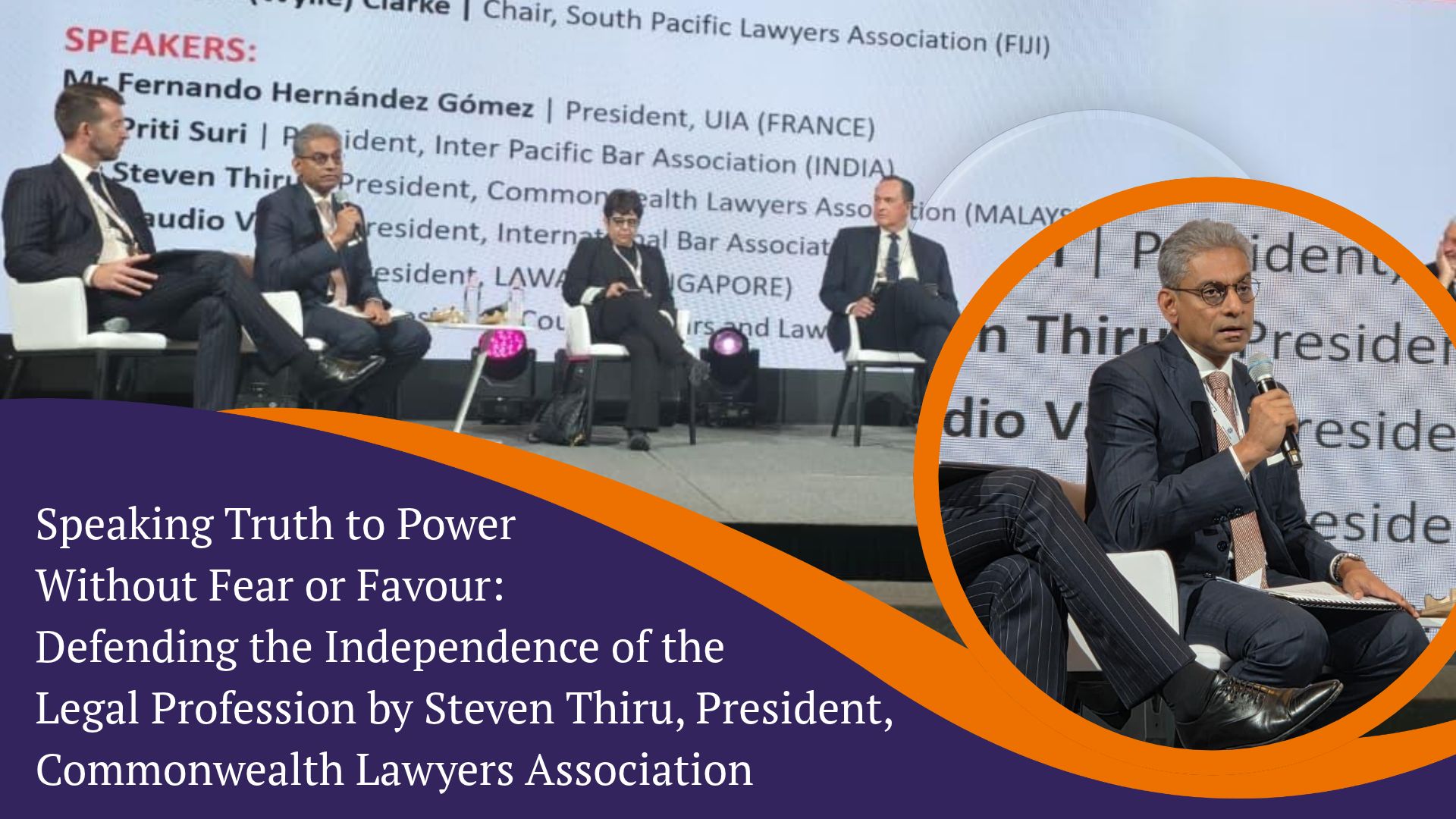
During his presentation, Steven Thiru highlighted the CLA’s deep concern over the increasing risks to the safety and independence of legal professionals and the legal profession in the Commonwealth. He drew urgent attention to the Council of Europe’s “Luxembourg Convention”, which the CLA formally endorsed via a January 2026 Declaration as the new international treaty and “gold standard” for the legal profession.
Recognising the Convention as the first binding international instrument dedicated exclusively to safeguarding the independence, physical safety, and integrity of legal practitioners and the protection of Bar Associations and Law Societies, the CLA is proactively encouraging Commonwealth member governments to consider accession when it opens globally in 2027 and/or domestication.
As President Steven Thiru emphasised to ministers, access to justice is impossible without a protected and independent legal profession, and without meaningful access to justice, the rule of law suffers.
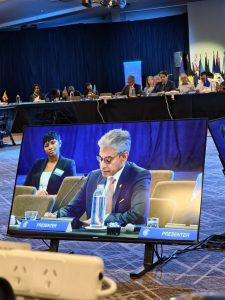
Birth Registration and Protecting Vulnerable Children: During discussions on protecting vulnerable groups and prioritising their justice needs, including those of women, children and youth, the CLA’s expertise was heavily drawn upon. Law Ministers formally received a paper on Birth Right Registration in the Commonwealth, which was initiated by the CLA in collaboration with the Secretariat.
The paper presents proposals for strengthening legal frameworks for birth registration as a fundamental building block for implementation of the Commonwealth’s 2022 Kigali Declaration on Child Care and Protection Reform. Ministers encouraged the mainstreaming of protective interventions to meet the justice needs of women and youth. Fundamentally, access to justice, education and health facilities requires legal acknowledgement of a person’s standing or identity through birth registration and a birth certificate.
President Steven Thiru noted that birth registration is a fundamental human right that guarantees legal identity of children, and a birth certificate is the passport to lifelong protection.
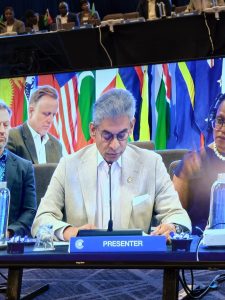
Addressing Disinformation by Ensuring Technology Serves Democracy: The CLA also co-facilitated a session on “Legal Responses to Misinformation and Disinformation”, presenting a discussion paper authored by CLA Council member and Vice President for Europe Mark Stephens CBE. This addresses emerging issues surrounding disinformation via social media and digital platforms and the need to strengthen electoral integrity while simultaneously safeguarding freedom of expression and due process.
Ministers were concerned about the rise of disinformation, including foreign disinformation campaigns, noting the threat of erosion of trust and integrity in electoral and democratic processes and their severe impact on citizen participation. They welcomed being informed about successful efforts to address disinformation via online platforms, including the use of MOUs with technology companies to mitigate risk.
President Steven Thiru highlighted that the paper also invited ministers to note that a coordinated, human rights-based approach – rooted in transparency, accountability, and universal principles articulated in the UN Guiding Principles on Business and Human Rights – would materially strengthen information integrity during elections.
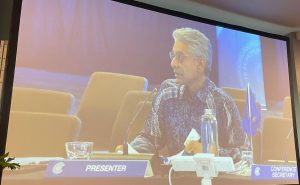
This session mandated the Commonwealth Secretariat to provide guidance on ways in which the Commonwealth could further support member states in combatting misinformation and disinformation.

Expanding Legal Resources via the Commonwealth Pro Bono Centre: President Steven Thiru led discussions surrounding the Commonwealth Pro Bono Centre (CPBC). Launched in March 2025 and operating virtually, this is available to connect attorneys general and legal advisers from 14 least developed Commonwealth countries with leading law firms, providing expert legal counsel on a wide range of issues otherwise unavailable to them. The Fiji Outcome Statement formally notes with satisfaction the conclusion of work on setting up the CPBC in 2025.
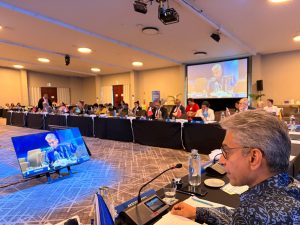
Underpinning this project is the Commonwealth Declaration on Equal Access to Justice. The Centre is designed to broaden access to high-quality legal assistance, strengthen the delivery of fair and efficient justice, and uphold rights-based legal systems across member countries.
Recognised as a joint project of the Commonwealth Secretariat and the Commonwealth Lawyers Association, the Pro Bono Centre is now responding to requests and encouraging Ministers for Justice and AGs to utilise the service. This initiative is being driven by Brian Speers, Past President of the CLA and Council member, who continues to serve on the CLA Pro Bono Committee.
On the heels of this presentation, the CLA was approached by one the eligible countries and steps have already been taken to facilitate the request.


Advancing Human Rights: At the inaugural Partners’ Breakfast official side event, the CLA joined other Commonwealth Partner Organisations to facilitate an important dialogue with Ministers and Senior Officials. The breakfast conversation centred on driving stronger implementation of international human rights and humanitarian law norms across the Commonwealth. President Steven Thiru provided the concluding remarks.
President Steven Thiru concluded that “The true strength of the law is not revealed in how firmly it controls – but how justly it protects. If we are bold enough to reform the laws we inherited, we will build legal systems worthy not of our past, but of our future.”

Networking and CLA Partnerships for the Future
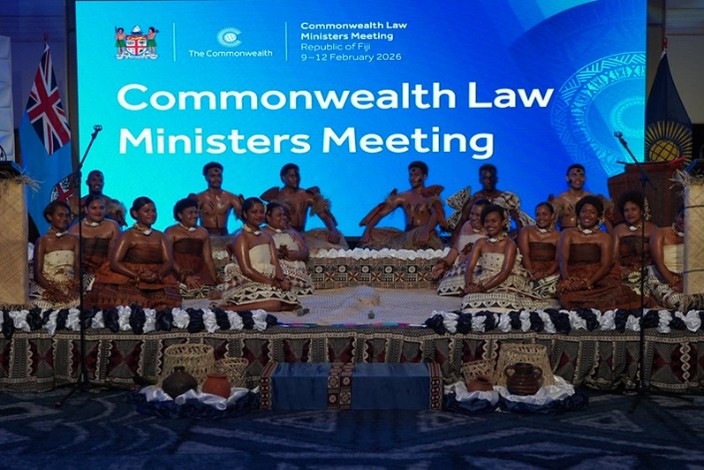
The formal programme was enriched by cultural events and a Gala Dinner. There were also numerous opportunities for re-establishing contacts with ministers, AGs, senior officials and partner organisations and holding meetings and discussions with new contacts. During a meeting with Wylie Clarke, President of the Fiji Law Society, collaboration on the protection of lawyers in the Commonwealth was agreed.

An outcome of a meeting with the Singapore International Mediation Centre (SIMC) is a proposed MOU between the SIMC, CLA and the Commonwealth Secretariat to take forward work on mediation. The SIMC is Singapore’s leading provider of alternative dispute resolution.
The CLA actively promotes mediation and mediation training to improve access to justice and encourage efficient, cost-effective dispute resolution across the Commonwealth and stands ready to assist Law Ministers and the Commonwealth Secretariat further using the resource of CLA mediators. We also continue to encourage all Commonwealth members to ratify the Singapore Convention on Mediation which applies to international commercial disputes, viewing this as having a positive effect on Commonwealth trade and investment.
This CLMM was the final official overseas engagement of Prof. Luis Franceschi, Assistant Secretary-General of the Commonwealth Secretariat, who has been such a valued colleague to the CLA.

A Forward-Looking Commitment
The 2026 CLMM in Fiji was a resounding success. Ministers committed to renewing democracy and to advancing the Nadi Declaration across all member states through strengthening cooperation, capacity-building and collective action.
The CLA’s robust participation, our advocacy for the protection of lawyers, and the formal recognition of our collaborative projects in the Outcome Statement stand as a testament to our ongoing mission and advocacy work and the high regard in which we are held. Guided by the leadership of President Steven Thiru and with the support of Council and the secretariat under Brigid Watson, the CLA remains unwavering in its dedication to building more resilient, responsive, and equitable legal systems across the Commonwealth.
“Let us remember what earlier generations secured through vigilance cannot be preserved through complacency. The measure of our leadership will not be the promises we repeat – but the rights we protect.”

Steven and Brigid have since travelled on to Darwin in the Northern Territory of Australia to undertake a site visit for the CLA’s 25th Commonwealth Law Conference. This will take place from 9-13 May 2027.