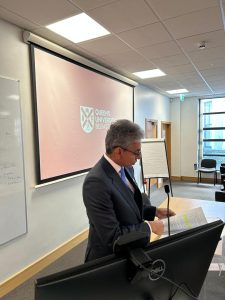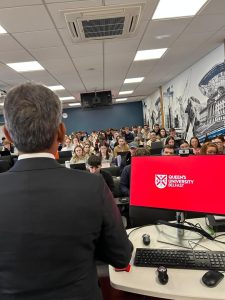


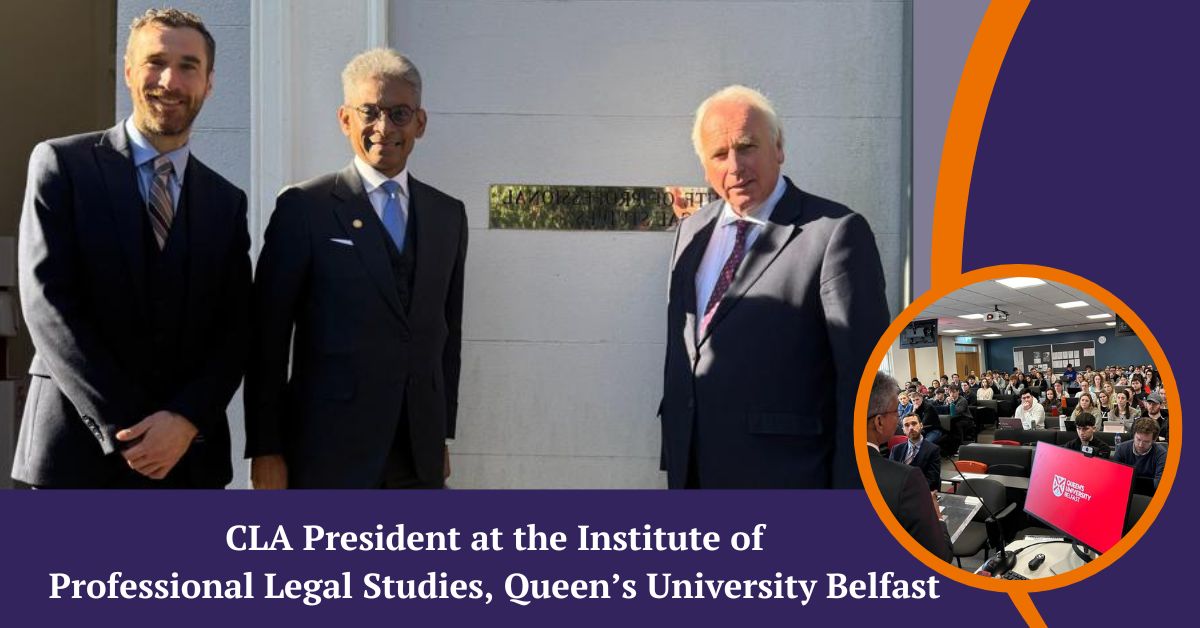
CLA News / CLA President Steven Thiru’s speech at the Institute of Professional Legal Studies, Queen’s University Belfast

Judicial Review and Abuse of Powers[i]
by
Steven Thiru, President of the Commonwealth Lawyers Association[ii]
Unless we make the requirements for administrative action strict and demanding, expertise, the strength of modern government, can become a monster which rules with no practical limits on its discretion. Absolute discretion, like corruption, marks the beginning of the end of liberty.[iii]
Introduction
Modern governance increasingly entrusts wide discretionary powers to the executive to regulate public administration. While such powers may be necessary for effective governance, the rule of law requires legal limits to the exercise of such powers by a public authority. The unbridled exercise of executive powers — or unfettered discretion — offends a basic tenet of the rule of law; every legal power must have legal limits.[iv]
Judicial review is the principal legal mechanism through which restrictions are placed on the exercise of executive powers. It enables the courts to ensure that governmental authorities act within the confines of the law. Judicial review is concerned with the vires or legality of public decision-making, and it curbs the abuse of public power.
Judicial review — as part of administrative law or the common law of public administration — operates as a vital safeguard against the abuse of executive powers by requiring that public power remains accountable to law. It forms an essential component of constitutional governance. It sets standards for administrative propriety.[v] Thus, Lord Diplock in R v Inland Revenue Commissioners[vi] observed that “progress towards a comprehensive system of administrative law . . . I regard as having been the greatest achievement of the English courts in my judicial lifetime”.
View the full paper here
Footnotes:
[i] Speech delivered at the Institute of Professional Legal Studies, Queen’s University Belfast, 6 March 2026.
[ii] With the assistance of Yadhurshan Soma Sundharem Kumar, and Justyn Avynash Jiwa, pupils in chambers of Steven Thiru; and Chin Oy Sim.
[iii] Douglas J. in New York v United States 342 US 882, 884 (1951).
[iv] Pengarah Tanah dan Galian v Sri Lempah Enterprises [1979] 1 MLJ 135.
[v] Rabinder Singh, Substantive Principles of Administrative Law: Developments Since 1987 (Public lecture at the LSE, 11 March 2026).
[vi] R. v Inland Revenue Commissioners, ex p National Federation of Self-Employed and Small Businesses Ltd. [1982] AC 617.
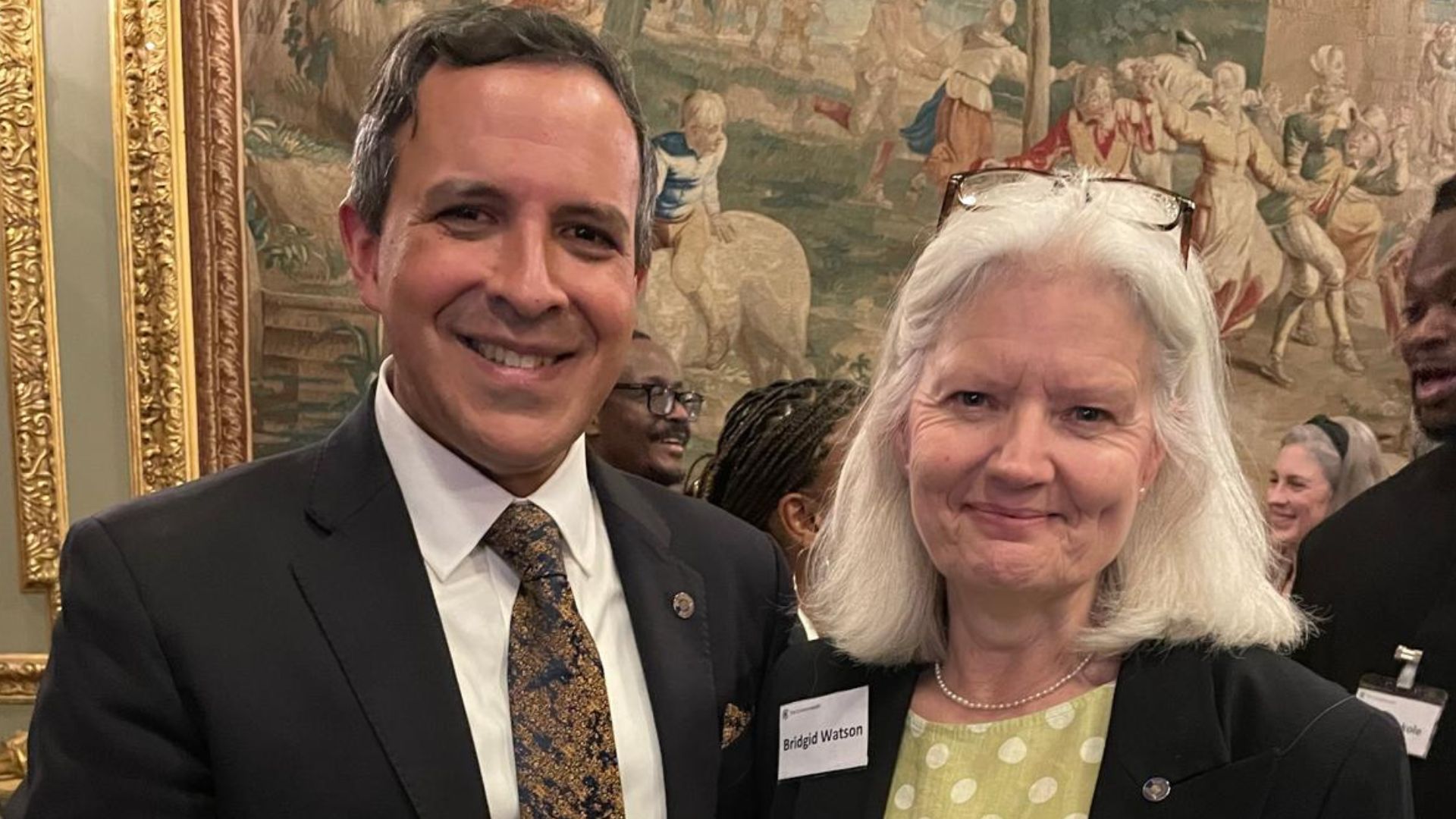
From left: Brian Speers, Steven Thiru, and Stuart Harper