

CLA News / CLA President’s Message on the occasion of International Women’s Day 2026 (8 March 2026)

Equality Under Law: Advancing Rights, Leadership, and Opportunity for All Women and Girls by Steven Thiru, President of the Commonwealth Lawyers Association
It is my sincere hope that my appointment will be the forerunner of many more appointments of women in the legal field and all top-level and managerial positions in our country.
Justice Désirée Bernard, Guyana
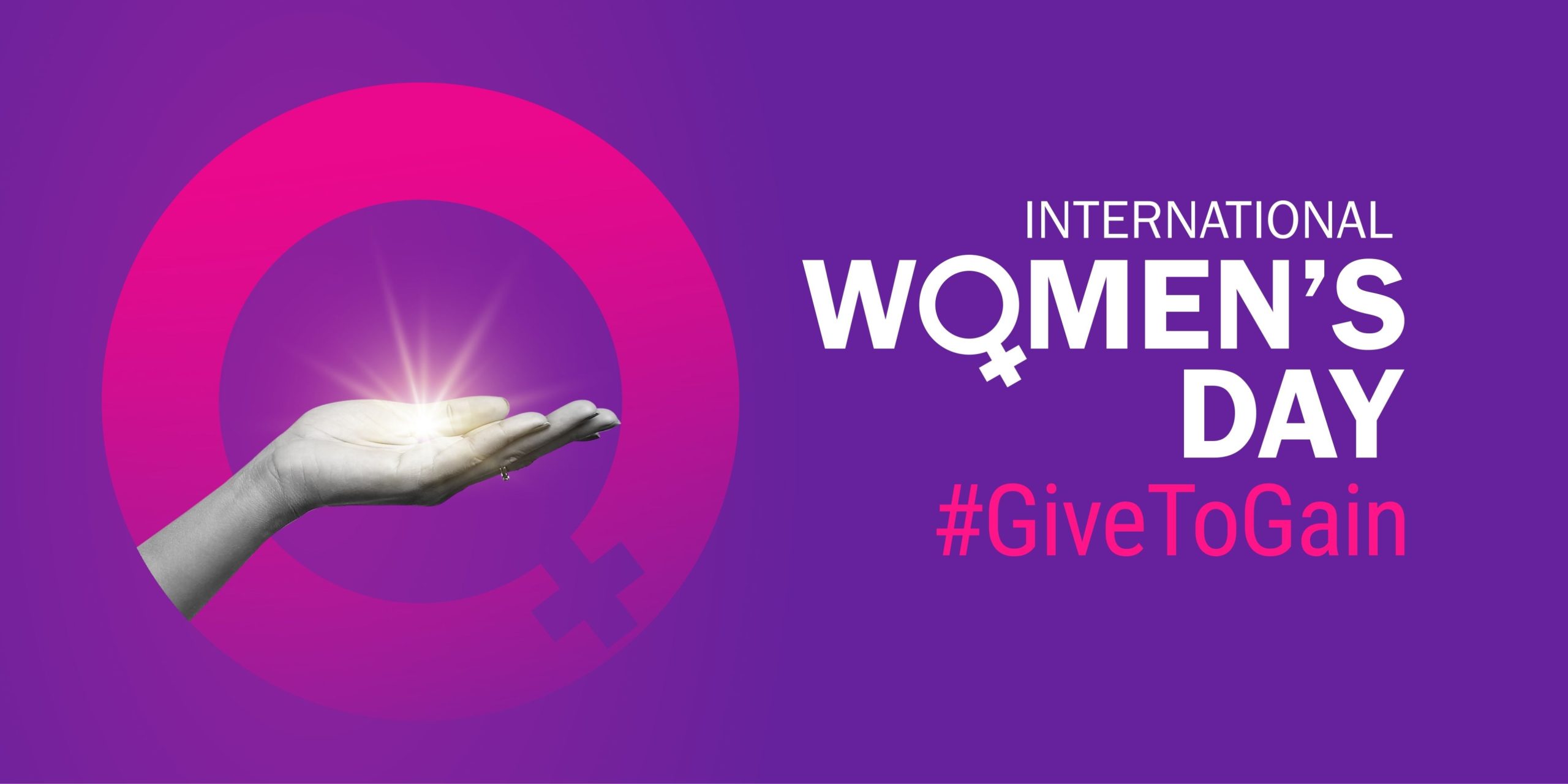
International Women’s Day invites reflection not only on progress achieved, but also on the deeper structural commitments still required to secure justice for all women and girls. Two of the key themes for 2026 — ‘Give to Gain’ and ‘Rights. Justice. Action. For ALL Women and Girls.’ — highlight interlocking dimensions of empowerment.
The first, the International Women’s Day 2026 campaign theme, calls for deliberate and sustained contribution, urging individuals, institutions, and communities to invest their support, influence, and effort in advancing gender equality. The second, the official United Nations theme, focuses on dismantling barriers to equal justice: challenging discriminatory laws, strengthening legal protections, and transforming social norms to address the lived realities and defend the rights of all women and girls.
Representation and the Profession: Embodying ‘Give to Gain’
Justice Désirée Bernard was the first female Chief Justice of Guyana (1996), and the first female Chancellor of the Judiciary of Guyana (2001). She exemplifies the transformative power of representation, the impact of which reaches far beyond individual accomplishment, and stands as a powerful signal that entrenched obstacles, long thought insurmountable, can be challenged and overcome.
The theme ‘Give to Gain’ resonates deeply with this philosophy. ‘Give’ is not confined to material contribution; it also embraces representation — showing the way, extending opportunities, sharing experience, offering guidance, amplifying achievements, and, perhaps most powerfully, embodying what is possible. This responsibility does not, however, rest with women alone. It calls upon men and women alike — particularly those in positions of influence — to foster an environment in which women can thrive: one that confronts stereotypes, challenges bias, condemns discrimination, addresses structural inequities, and advocates reform.
In doing so, society ‘gains’, moving closer to gender equality. Giving time, knowledge, resources, and advocacy to support women’s advancement strengthens the foundations of equity and inclusion. The result is a richer diversity of leadership, fairer access to opportunity, more equitable decision‑making, and a culture in which talent is recognised regardless of gender. Most importantly, intentional solidarity creates a virtuous cycle: as women receive and extend mentorship, visibility, and encouragement, more women are empowered to step forward, bringing us closer to the collective progress envisioned by Justice Désirée Bernard.
The Legal Profession as a Driver of Enduring Empowerment
The legal profession occupies a crucial position in advancing the spirit of ‘Give to Gain’, as lawyers and judges are uniquely placed to cultivate a profession and shape public norms to ensure women are not merely present, but are empowered to flourish.
One of the clearest expressions of the ‘Give to Gain’ commitment lies in the provision of pro bono services. Across jurisdictions, members of the profession devote their time and expertise so that women facing disadvantage or discrimination may secure meaningful access to justice. In doing so, the profession demonstrates that generosity of skill and service yields progress towards gender equality. In each instance below, the profession lends skill, guidance, and advocacy to advance women’s rights:
- In Australia, the Women’s Legal Centre ACT provides independent assistance to women affected by sexual violence and harassment.
- In Hong Kong, solicitors volunteer at the RainLily clinic to advise women seeking redress for sexual discrimination through the Equal Opportunities Commission.
- In the United Kingdom, the Centre for Women’s Justice coordinates volunteer lawyers to challenge systemic failings in the justice system’s response to violence against women.
Equally vital is the cultivation of mentorship, through which today’s leaders guide the development of a more inclusive and capable cohort of leaders for tomorrow. Structured initiatives such as the Women’s Law Association of Ontario’s mentoring programme promote networks and professional development to advance women within the Canadian Bar.
This tenet of professional stewardship was eloquently underscored by Justice Indira Banerjee, former Judge of the Supreme Court of India, who urged colleagues to actively “welcome the woman, mentor the woman’’. She emphasised the importance of professional environments that are understanding, supportive, and inclusive. Her words reinforce that empowerment is not achieved in isolation, but nurtured through deliberate acts of guidance, solidarity, and shared responsibility within the profession.
Recognising Women Leaders: The Transformative Power of ‘Give to Gain’
The legal profession also ‘gives’ by recognising and celebrating the contributions of women in law, which not only honours individual excellence but also signals to aspiring practitioners that women can rise to positions of influence and effect change at the highest levels.
This ethos is exemplified by the accolade awarded to Faith Mony Odhiambo — the 7th Commonwealth Law Conference Rule of Law Award in 2025 — recognising her unwavering commitment to justice and human rights, notably her tireless advocacy for arrested citizens during the 2024 Gen Z-inspired anti-tax protests in Kenya. In 2024 she had been elected the second female President of the Law Society of Kenya. Faith’s journey epitomises ambition, resilience, and service.
Equally important is honouring those whose trailblazing achievements have paved the way for others. On 20 November 2025, we mourned the passing of Retired Justice Leonora van den Heever, South Africa’s first female judge. Appointed in 1969, she shattered a formidable glass ceiling, and in 1991 became the first woman to serve permanently on the Appellate Division (later the Supreme Court of Appeal). As Chief Justice Mandisa Maya, the first female Chief Justice of South Africa, aptly noted, “Her pioneering presence opened doors for women in the Judiciary law [sic], and her legacy lives on in the many who follow in her footsteps.”
Neither age nor years at the Bar are prerequisites for acts of courage and innovation that inspire others. During my visit to Rwanda last year, I was particularly impressed by a young lawyer, Josiane Uwineza, who has carved out a impactful space in advancing access to justice. Each week she records short TikTok videos in the national language, Kinyarwanda, to reach the poor and marginalised, bridging the divide between formal legal institutions and the communities they are meant to serve. Her work is a powerful reminder that pioneering efforts do not always announce themselves as grand institutional reforms; sometimes they unfold in sixty-second videos, spoken in a familiar tongue.
In all these respects, the legal profession illustrates the profound reciprocity of ‘Give to Gain’. By fostering a more just, equitable, and representative system, the profession fulfils not only the aspirations of International Women’s Day, but the deeper promise of the rule of law itself.
While professional empowerment, representation, and mentorship within the profession are vital, they must be matched by systemic fairness that addresses the everyday experiences of women beyond professional spaces.
Rights. Justice. Action: Ensuring No Mother Is Left Behind
If professional empowerment reflects one dimension of progress, the United Nations theme — ‘Rights. Justice. Action. For ALL Women and Girls’ — directs attention to structural justice in the lived realities of women. While it is impossible to traverse the full breadth of what this theme encompasses, it is important to reflect on one group that unquestionably forms part of the ‘ALL’, yet often receives insufficient and fragmented attention in discourse: mothers.
International human rights law does not, in fact, contain a universally accepted definition of a ‘mother’. No core treaty, not even the Convention on the Elimination of All Forms of Discrimination against Women (CEDAW), provides a definition. Article 10(2) of the International Covenant on Economic, Social and Cultural Rights (ICESCR) provides that special protection should be accorded to mothers before and after childbirth, including paid leave or adequate social security benefits. However, this provision offers protection without definition.
This lacuna is consequential. Mothers, by virtue of their biological, social, and caregiving roles, encounter distinct vulnerabilities, warranting clearer legal recognition and protection within the human rights framework. The absence of a coherent, universally accepted understanding risks rendering their practical realities invisible at precisely the moments when targeted safeguards are most needed.
Across political upheavals, economic downturns, environmental disasters, armed conflicts, and public health emergencies, mothers consistently shoulder a disproportionate share of hardship. These pressures extend beyond their personal well-being to the sustainability of caregiving itself, as mothers frequently absorb the strain of sustaining households, raising children, and maintaining family stability, labour that underpins the functioning of families and societies alike, yet which remains persistently undervalued and uncompensated, and insufficiently recognised or supported by institutional frameworks.
Economic crises often exacerbate this imbalance, with mothers facing heightened precarity in employment and reduced access to stable income, a phenomenon starkly illustrated by gendered job losses during periods of widespread economic disruption. Simultaneously, crises may curtail mothers’ access to essential rights and services, from healthcare to social protection, compounding both immediate and long-term vulnerabilities.
In conflict settings, the burdens are even more acute, with a 2024 United Nations report documenting that thousands of pregnant women and new mothers in Sudan risk starvation due to food aid being blocked, while in Gaza many mothers forgo their own meals to ensure their children can eat.
If ‘Rights. Justice. Action.’ is to have substantive meaning, then action must include a renewed commitment to recognising and safeguarding the rights of mothers in their fullest sense. Mothers are not a peripheral category within the promise of equality; they are central to it.
Even at the domestic level, the need to safeguard mothers’ rights is unmistakable. Matters of custody, guardianship, religious status, and the enforcement of court orders profoundly shape the lived experiences of mothers and their children. Where court judgments are subject to protracted delay, deliberate evasion, or failure of enforcement, the authority of the rule of law itself is diminished.
The Indira Gandhi case in Malaysia illustrates this reality with particular force. The dispute arose following the unilateral conversion to Islam of minor children by a father, and their subsequent removal from the mother’s custody, raising constitutional questions concerning parental consent for such conversion. In 2018, the Federal Court of Malaysia affirmed that the conversion of a minor to Islam requires the consent of both the father and mother. One child, however, remains at large, presumably in the custody of the recalcitrant father. Tun Tengku Maimun Tuan Mat, Malaysia’s first female Chief Justice, reflected in a public talk that the case was ultimately about family rather than faith, and the plight of a mother deprived of any relationship with her children.
In the same spirit, two other Malaysian mothers have demonstrated extraordinary courage in the face of state silence: Susanna Liew Sow Yoke, the wife of Pastor Raymond Koh, and Norhayati Mohd Ariffin, the wife of Amri Che Mat. Following the enforced disappearances of their husbands in 2016 and 2017, respectively, both women have pursued truth and accountability through sustained public advocacy and legal action. The Kuala Lumpur High Court in November 2025 held the Government and police liable for state involvement in these enforced disappearances, in a landmark judgment that underscored state accountability for human rights violations. The two women’s steadfast advocacy and resolve illustrate how mothers, even amid profound personal loss, can become principled defenders of the rule of law itself, safeguarding not only their families but also the broader principles of justice to which all mothers and children are entitled.
A Commitment Beyond Observation: Rights, Justice, Action
International Women’s Day 2026 is a reminder that the pursuit of equality, justice, and meaningful protection for all women and girls must be deliberate, sustained, and uncompromising — transforming principle into practice and promise into reality.
Steven Thiru
President
Commonwealth Lawyers Association
5 March 2026
Steven Thiru records his appreciation to Jaishanker Sadananda and Chin Oy Sim for their assistance in preparing this article.