CLA News / Commonwealth leaders call for action on climate resilience, economic opportunity and inclusive growth at CHOGM 2026

Antigua and Barbuda | 3 November 2026
Commonwealth leaders have called for stronger public–private partnerships, fairer access to climate finance and greater investment in young people and women, emphasising that the Commonwealth must move beyond political declarations to deliver meaningful and measurable change.
At the joint forums of the 2026 Commonwealth Heads of Government Meeting (CHOGM) in Antigua and Barbuda, political leaders highlighted the urgent need for coordinated action to address climate change, economic inequality, democratic resilience and barriers to inclusive prosperity.
Bringing together government leaders, the private sector, civil society and youth representatives, the discussion focused on how the Commonwealth can translate shared priorities into practical partnerships, sustainable investment and tangible outcomes for its 56 member states.
Closing the gender gap and investing in young people
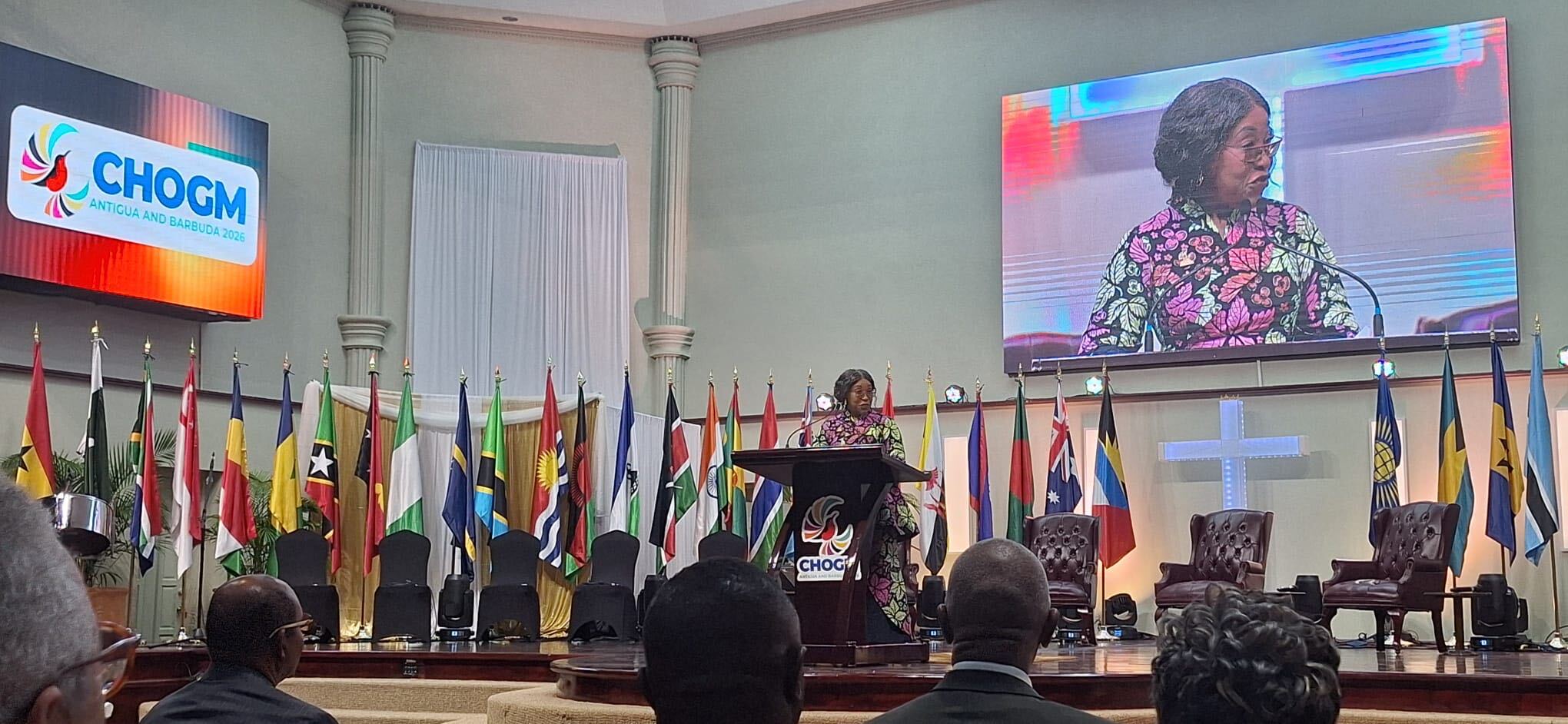
In her keynote address, Commonwealth Secretary-General Shirley Botchwey called for renewed and decisive action to tackle gender inequality and gender-based violence, warning that, at current rates of progress, closing the economic gender gap could take more than 150 years.
She emphasised that young people must be recognised not simply as beneficiaries of development initiatives, but as active participants in governance, economic decision-making and democratic life.
Highlighting the potential of public–private partnerships, the Secretary-General outlined ambitions to equip 10 million young people with digital and entrepreneurship skills over five years and mobilise more than US$1 billion for renewable energy initiatives.
Her message was clear: business as usual is no longer sufficient. Delivering a more inclusive and resilient Commonwealth requires investment at scale, meaningful youth participation and sustained commitment to gender equality.
Climate resilience requires more than promises
Antigua and Barbuda’s Prime Minister, Gaston Browne, placed particular emphasis on the challenges facing small island developing states (SIDS), which remain disproportionately exposed to climate change despite contributing relatively little to global emissions.
He called for fairer access to international climate finance and investment, stressing that vulnerable nations need practical financial support and genuine economic opportunities rather than expressions of sympathy alone.
Prime Minister Browne also challenged traditional divisions between government and the private sector, arguing that complex global challenges require collaboration across business, civil society, governments and communities.
He called for sustainable investment that delivers lasting social and environmental benefits alongside financial returns, while recognising the interconnected importance of youth empowerment, women’s economic participation and strong civil society.
Crucially, he urged Commonwealth members to move beyond non-binding declarations and establish clear implementation plans backed by tangible commitments.

Democracy, responsible technology and a stronger Commonwealth partnership
Australian Prime Minister Anthony Albanese highlighted the Commonwealth’s responsibility to defend democratic institutions, strengthen international cooperation and support its more vulnerable members.
He emphasised the importance of election observation, democratic reform and protecting elected representatives, particularly women, from intimidation and violence.
He also called for greater support for smaller and developing nations, particularly in the Pacific and Caribbean, to strengthen their democratic, economic, social and climate resilience. Their voices, he argued, must be amplified in international decision-making, with partnerships founded on equality and mutual respect.
On technology, Prime Minister Albanese acknowledged the transformative potential of artificial intelligence while warning against its misuse. He called for responsible AI governance, international standards and appropriate digital protections to ensure that technology serves humanity rather than enabling disinformation, misogyny or interference in democratic processes.
Climate action was another central priority, with particular emphasis on strengthening the influence of Pacific and island nations in international climate negotiations, including the forthcoming COP31.
He also underlined the importance of restoring peace and stability in regions affected by conflict, noting the wider consequences for international trade, economic security and global prosperity.
Reaffirming Australia’s commitment to the Commonwealth, he stressed that its collective strength lies in working together as trusted partners, listening to one another and responding collaboratively to shared challenges.
What this means for the Commonwealth legal community
The discussions raised important questions for the Commonwealth legal profession, particularly around the role of the rule of law, effective governance and accountability in delivering sustainable and inclusive development.
The commitments outlined by Commonwealth leaders will require robust legal and regulatory frameworks to ensure that financing reaches intended beneficiaries, public–private partnerships operate transparently and investment delivers measurable outcomes.
For small island developing states, this includes developing effective legal frameworks for climate-resilience financing, environmental protection and sustainable investment. It also highlights the importance of access to justice and legal protections for communities most exposed to climate-related risks.
The emphasis on gender equity and youth participation reinforces the need for legal systems that protect fundamental rights, promote equal opportunities and enable meaningful participation in democratic institutions. Meanwhile, the call for responsible AI governance presents further opportunities for Commonwealth lawyers to contribute to the development of appropriate regulatory standards and safeguards.
For the Commonwealth Lawyers Association, these priorities reinforce the importance of its work in strengthening the rule of law, supporting independent legal professions, promoting human rights and advancing access to justice across the Commonwealth.
The challenge emerging from CHOGM 2026 is not simply to agree on a shared vision, but to ensure that commitments translate into action. A resilient Commonwealth depends on strong institutions, effective legal frameworks and partnerships capable of delivering lasting prosperity for its people.