

CLA News / Obligations of States in Respect of Climate Change: Impacts and Outcomes for the Caribbean By Makayla Williams

The ICJ Advisory Opinion on Legal Obligations of States in Respect of Climate Change establishes clear State obligations in respect of climate change under international law for States and legal consequences arising from climate change, including the classification of marine pollution as an internationally wrongful act. It provides a strong basis for small island developing states (“SIDS”) in the Caribbean and across the world to advocate for enhanced climate action and seek accountability from developed nations who contribute disproportionately to climate change.
Procedural Overview
The General Assembly of the United Nations by resolution 77/276 adopted on 29 March 2023 submitted a request for an advisory opinion to the International Court of Justice (“Court”).
The General Assembly posed two questions to the Court. The first concerned the obligations of States under international law to ensure protection of the climate system and other parts of the environment from anthropogenic greenhouse gas (“GHG”) emissions, for present and future generations. The second addressed the legal consequences arising where States, by their acts or omissions, have caused significant harm to the climate system, with particular regard to SIDS and to present and future generations.
Each member State presented arguments to the Court in support of their respective positions. Impactful oral[1] and written submissions were made by representatives from key interest groups.[2] Notably, the Coalition of Small Island States (COSIS) which makes up small island states from the Caribbean and Pacific, and CARICOM[3] States presented their arguments to the Court emphasising the unique circumstances of SIDS and the far-reaching consequences of climate change. The Court relied on the Intergovernmental Panel on Climate Change reports as the best available science on the causes, nature and consequences of climate change.[4] It emphasised that human activities, primarily through GHG emissions unequivocally cause global warming with widespread adverse impacts on ecosystems and human populations.
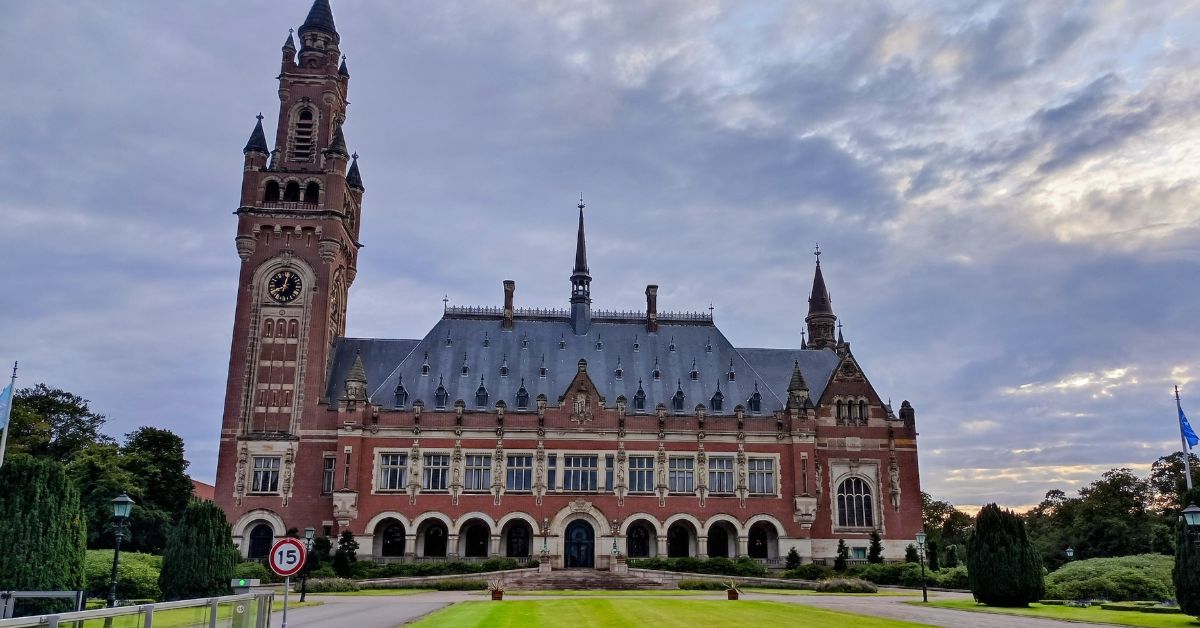
On 23 July 2025, the ICJ delivered its Advisory Opinion (“Opinion”) addressing the legal obligations of States in respect of climate change. The following is a summary of the Court’s findings.
Question (a): Obligations of States in respect of climate change
The Court considered the obligations of States in respect of climate change at paragraphs 112-404 of the Opinion. In formulating its reply to the questions, the Court framed the material, territorial and temporal scope of its inquiry. Regarding its material scope, the Court observed that question (a) asked the Court to set forth the legal obligations of States under international law to “ensure the protection of the climate system and other parts of the environment from anthropogenic emissions of greenhouse gases”.
Applicable law and interpretation
As part of the assessment of the questions, the Court identified the applicable law as the climate change treaties, rules of customary international law, rules on State responsibility under customary international law inclusive of the Charter of the United Nations, the Paris Agreement, and the United Nations Convention on the Law of the Sea. Each agreement imposes different legal responsibilities. However, the Court found that the climate change treaties do not constitute lex specialis to generally exclude other rules of international law. As such, customary international law rules were identified as applicable law.[5] This includes common but differentiated responsibilities and respective capabilities, equity and intergenerational equity, the precautionary approach or principle, the “polluter pays” principle[6] and principles grounded in sustainable development.
The Court interpreted question (a) as requiring the identification of State obligations concerning activities that adversely affect the climate system through anthropogenic GHG emissions and the legal consequences of breaching these obligations. The legal consequences in question (b) were interpreted to refer to those arising from breaching any of the obligations identified in relation to question (a).[7]
The Court found that States have a duty to prevent significant harm to the environment[8] and a duty to co-operate for the protection of the environment.[9] Treaties and customary international law retain separate existences but inform the application of the obligations of States. States are required to make good faith efforts to arrive at appropriate forms of collective action, especially to achieve the collective global temperature goals with the level of co-operation varying by a State’s capability.
Obligations under the United Nations Convention on the Law of the Sea (UNCLOS)
Of particular interest for SIDS, the Court relied on the International Tribunal for the Law of the Sea (“ITLOS”) advisory opinion rendered on climate change and international law which addressed the relationship between UNCLOS and climate change.[10] ITLOS found that anthropogenic GHG emissions may be characterised as pollution of the marine environment under UNCLOS.[11] While observing the sovereignty of States parties to exploit their natural resources pursuant to their environmental policies,[12] the Court, by ascribing weight to the ITLOS interpretation, adopted its findings and thereby confirmed the duty of States in protection of the marine environment.[13] As such, environmental impact assessments are required for planned activities that may cause substantial pollution or significant harmful changes to the marine environment.
UNCLOS does not require member States to update charts or lists of geographical co-ordinates for baselines and outer limit lines of maritime zones once duly established by maritime delimitation.[14] This is important to note, notwithstanding the physical changes that are affecting islands due to sea level rise. Further, UNCLOS does not recognise the disappearance of a State’s constituent elements as loss of statehood. The duty to co-operate takes on particular significance in this context requiring States to work together for equitable solutions to changes in boundaries and the acceptance of climate change refugees.
Question (b) – Legal Consequences arising from States’ acts and omissions that cause significant harm to the climate system, and other parts of the environment
Question (b) asked the Court to address the legal consequences under these obligations for the “acts and omissions” of States where they have caused significant harm to the climate system and other parts of the environment. In the Court’s view, the two questions were interrelated and required the Court to identify the obligations of States in respect of activities that adversely affect the climate system, as well as the legal consequences arising from the breach of these obligations.
Determination of State responsibilities in climate change context
The Court found that obligations pertaining to the protection of the climate system and other parts of the environment under customary international law and climate treaties are erga omnes or erga omnes partes. All States, therefore, have a legal interest in the protection of such obligations and may invoke responsibility, though remedies for non-injured States are limited.
Legal consequences arising from internationally wrongful acts
The Court further held that legal consequences for States arise under the law of state responsibility which classifies an internationally wrongful act of a State as conduct consisting of an action or omission that is: (1) attributable to the State under international law; and (2) constitutes a breach of an international obligation of the State.[15]
Conclusion
The Court’s advisory opinions are non-binding on member States. However, the requesting organ, being a combination of affected States, can determine the effect given to the Opinion. The effectiveness therefore lies in the use of the decision, as advisory opinions carry legal weight and moral authority. The Opinion affirms that States have clear legal obligations under international treaties and customary international law to prevent significant transboundary harm. As such, failing to combat climate change may now be considered an internationally wrongful act. Importantly, the Court recognised that even if a State’s territory disappears due to sea-level rise, it continues legally as a sovereign entity.
Caribbean States can use the Opinion to negotiate binding financial mechanisms for adaptation assistance such as dedicated resilience funds with annual disbursements tied to climate‑impact benchmarks recognised by the Court. The Opinion is of particular significance for SIDS. The Court’s express recognition that SIDS are “specially affected” States within the meaning of international law on State responsibility grants them standing to invoke the responsibility of high-emitting States and to seek reparation for climate-related harm. This is transformative: for the first time, the framework of international responsibility is not merely theoretical but is made accessible to the most vulnerable nations, who bear the least historic responsibility for GHG emissions yet suffer their most acute consequences.
The Opinion further confirms that obligations to provide financial and technical assistance to SIDS are legal obligations and not merely aspirational commitments. This gives SIDS a powerful legal foundation upon which to demand accountability at international climate negotiations, in arbitral proceedings, and before domestic courts. The Opinion can therefore serve as a living instrument of climate justice — one that SIDS can wield in advocating for enhanced loss and damage mechanisms, adaptation finance, and the preservation of their sovereignty and statehood in the face of rising seas.
By Makayla Williams
About the author:
Makayla Williams is a Barbadian Attorney-at-Law practicing in Barbados. She practises in maritime law and fisheries related law and governance with the Barbados government Fisheries Division. She is also a YCLA member.
FOOTNOTES:
[1] International Court of Justice, ‘Oral Proceedings – Obligations of States in respect of Climate Change’ (ICJ Case No 187, 2024–2025) <https://www.icj-cij.org/case/187/oral-proceedings> accessed 1 September 2025.
[2] Obligations of States in respect of Climate Change (Advisory Opinion) [2025] ICJ Rep (General List No 187) paras 28–36.
[3] Caribbean Community. See further https://caricom.org/.
[4] ibid paras 33, 60–61.
[5] ibid para 139.
[6] ibid paras 146, 151, 158, 159.
[7] ibid paras 101–106, 405–406.
[8] ibid paras 131–135.
[9] ibid paras 140–142.
[10] Request for an Advisory Opinion submitted by the Commission of Small Island States on Climate Change and International Law (Advisory Opinion) [2024] ITLOS Case No 31 (21 May 2024) pp 65–71, paras 161–179.
[11] Obligations of States in respect of Climate Change (Advisory Opinion) [2025] ICJ Rep (General List No 187) para 123.
[12] ibid para 344.
[13] ibid paras 339–343.
[14] ibid paras 339–354.
[15] International Law Commission, Responsibility of States for Internationally Wrongful Acts, UN Doc A/56/10 (2001) art 2.