

CLA News / Rivers With Legal Rights of Humans By Jatinder (Jay) Cheema

The conferral of rights of a juristic person on rivers calls for study by jurists and constitutional experts, global boundary specialists and UN bodies.
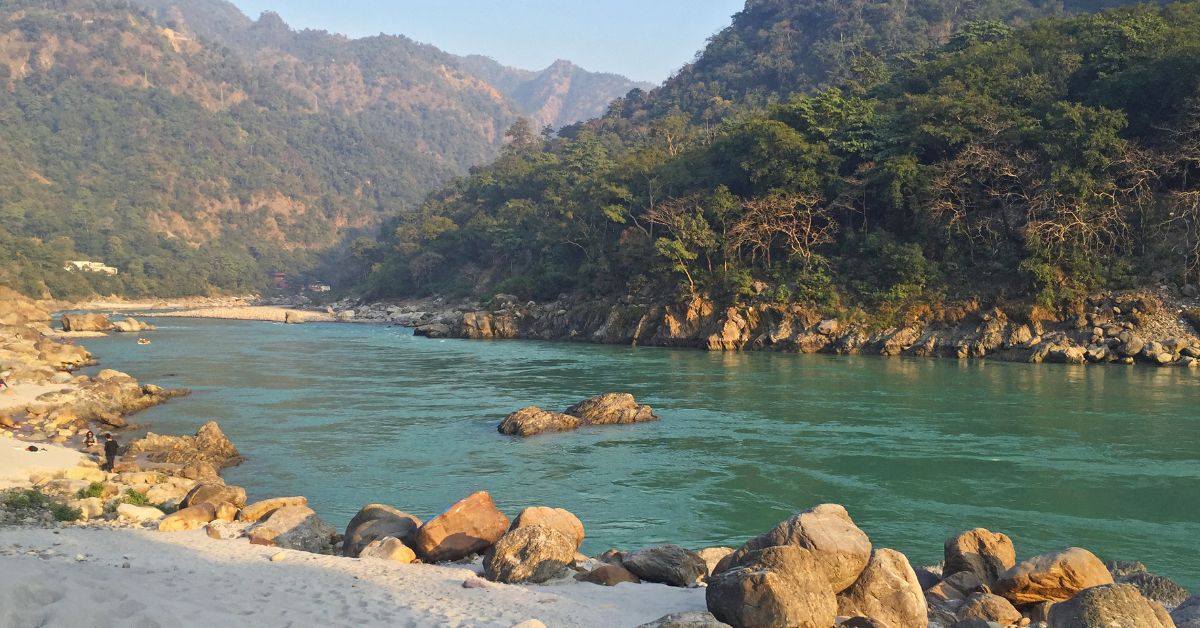
On 20th March 2017, the High Court of Uttarakhand, India, accorded the Ganga and Yamuna rivers the status of “living human entities”. The High Court declared:
“Accordingly, while exercising the parens patrie jurisdiction, the Rivers Ganga and Yamuna, all their tributaries, streams, every natural water flowing with flow continuously or intermittently of these rivers, are declared as juristic/legal persons/ living entities having the status of a legal person with all corresponding rights, duties and liabilities of a living person in order to preserve and conserve river Ganga and Yamuna”.
The Director of Namami Gange, the Chief Secretary of the State of Uttarakhand, and the Advocate General of the State of Uttarakhand were declared persons in loco parentis as a human face to protect, conserve, and preserve lives of Ganga and Yamuna, and their tributaries. However, this Order was stayed by the Supreme Court of India in July 2017.
Invoking rivers or other natural bodies as juristic persons is not new in other jurisdictions.
Aboriginal communities have spiritual and customary living relationship with water in all its forms. In 2008, the Ecuador constitution was the first in the World to provide for such recognition:
“Nature or Pachamama, where life is reproduced or exists, has the right to exist, persist, maintain and regenerate its vital cycles, structure, functions and its processes in evolution.”
In 2014, New Zealand recognised Te Urewera National Park as a legal entity with rights, powers, duties and liabilities as a “legal person”. Subsequently, a law was passed granting legal personhood status to Whanganui River ecosystem. In 2019, the Dhaka High Court recognised the Turag River as a living entity with legal rights and held this principle would apply to all rivers in Bangladesh.
In March 2020, the Punjab & Haryana High Court, India, made an order declaring the Sukhna Lake in Chandigarh as a living entity with rights equivalent to that of a person.
Declaring a river as a juristic person has several implications. It may resulting in courts injuncting any damage to the river including dams, pollution, diversions, industrial fishing, trawling and sand mining activities.
The corollary to conferring such a right on a river as a living being is that it would extend to its tributaries, biodiversity, forests, aquatic flora and fauna, rocks, and soil. Hence, the rights of the river may extend to ecological causes and conditions making up the natural habitat to be protected and maintained for the life and integrity of the river.
In the Indian context, there arises the issues of national interest as in the case of boundary disputes with China, flow of the Indus River system including the Jhelum, Chenab, Ravi, Beas and Sutlej Rivers into Pakistan, existing water disputes between the States of the Union and controlling of water depriving riparian states. Another daunting question is whether the state will pay compensation for pollution caused to the body of a river in accordance with the polluter pays principle?
These issues require careful reflection and further study.
Author: Jatinder (Jay) Cheema
About the author
Jatinder (Jay) Cheema is a lawyer at the Supreme Court of India, and the author of Climate Change: The Policy, Law and Practice, Thomson Reuters, 2024.