

CLA News / Report on the Visit of the President of the Commonwealth Lawyers Association, Steven Thiru, to Sri Lanka to Observe Proceedings Challenging the Constitutionality of the Proposed 22nd Amendment to the Constitution of Sri Lanka and to Meet with Concerned Parties

Introduction
1.The primary object of the Commonwealth Lawyers Association (‘CLA’) is to promote the rule of law throughout the Commonwealth by ensuring that the people of the Commonwealth are served by an independent and efficient legal profession, in accordance with, inter alia, the Commonwealth (Latimer House) Principles on the Three Branches of Government (2003).
2. The Latimer House Principles provide that “[a]n independent, impartial, honest and competent judiciary is integral to upholding the rule of law, engendering public confidence and dispensing justice”.
3. It is in furtherance of these objectives, and in particular the CLA’s commitment to the independence of the judiciary and the rule of law, that I undertook on behalf of the CLA to visit Sri Lanka to observe the proceedings before the Supreme Court of Sri Lanka challenging the constitutionality of the proposed 22nd amendment to the Constitution of Sri Lanka and to meet concerned parties.
4. The proposed amendment to Article 107(5) of the Constitution provides that the age of retirement of judges of the Supreme Court shall be sixty-seven years, while the age of retirement of judges of the Court of Appeal shall be sixty-five years. In respect of the Chief Justice, the proposed amendment further provides that the date of retirement shall be the earlier of the date on which the Chief Justice attains the age of sixty-seven years or the date on which six years are completed from the date of appointment as Chief Justice.
5. The visit to Sri Lanka was also undertaken at the invitation of the Bar Association of Sri Lanka (‘BASL’) by letter dated 31 August 2026, requesting me, in my capacity as President of the CLA, to observe the proceedings.
6. The visit also provided the CLA with an opportunity to engage with concerned parties and stakeholders — including members of the Bar — with a view to better informing ourselves of the issues arising in the matter and of the wider considerations relating to the independence of the judiciary and public confidence in the administration of justice.
7. I was accompanied during the visit by the CLA Council Member for Sri Lanka, Upul Jayasuriya PC. I am grateful to him for his generous hospitality, and thank him for his valuable assistance throughout the visit.
8. A total of 67 petitions were filed by various parties, including the BASL. The Respondent to these petitions is the Attorney General of Sri Lanka. There are 27 Interveners opposing the petitions.
9. The petitions were heard on 1 and 2 September 2026 by a five-member bench of the Supreme Court, headed by Chief Justice Preethi Padman Surasena, along with Justice Achala Wengappuli, Justice Arjuna Obeyesekere, Justice Sampath B. Abeykoon, and Justice K. M. G. H. Kulatunga.
10.I was not able to attend the first day of the proceedings, on 1 September 2026. I attended the proceedings on the second day, 2 September 2026. The proceedings were held in the Ceremonial Court of the Supreme Court (Courtroom No. 501) and were open to members of the public.
11. The BASL filed motions for the recusal of the Chief Justice and for the petitions to be heard by a full bench, comprising the 17 sitting Supreme Court judges. These motions were dismissed by the said five-member Supreme Court bench on 1 September 2026. I was informed that no reasons were given for the dismissal of the motions, other than that the Court had jurisdiction to hear the matter.
12. The petitions proceeded on 1 September 2026 from 10.30 a.m. to 10.45 p.m., and on 2 September 2026 from 10.00 a.m. to 5.30 p.m. Submissions made on the first day were solely by the Petitioners. On the second day, submissions were made by the remaining Petitioners, the Interveners, and finally by the Solicitor General on behalf of the Respondent. The submissions were comprehensive, and there was very little interruption by the judges
13.At the close of the submissions by the Interveners and the Respondent, several Counsel for the Petitioners rose to submit orally in reply to the submissions made by the Interveners and the Respondent. However, the Chief Justice directed that there would be no further oral submissions by the Petitioners, but permitted them to file written replies to submissions by 3.00 p.m. on 3 September 2026. Counsel for the Petitioners persisted in their request for an opportunity to make oral submissions in reply, but the Chief Justice did not accede to the request.
14. It is to be noted that, pursuant to Article 121(2) of the Constitution of Sri Lanka, the Supreme Court must decide on the petitions and deliver its determination by 8 September 2026. There was therefore a significant degree of urgency in concluding the proceedings.
Procedural Fairness and Other Matters of Concern
15. There are nevertheless several matters of concern that I observed, which were also raised by some members of the BASL. These concerns relate principally to questions of procedural fairness arising from the conduct of the proceedings before the Supreme Court, which may have implications for the Court’s decision-making process.
16. Procedural fairness is a fundamental aspect in the judicial decision-making process. Whether any particular departure from procedural fairness has legal consequences, including any effect upon the validity of a determination, would necessarily depend upon the circumstances and applicable law. It is therefore crucial that matters that may reasonably give rise to concerns regarding procedural fairness be considered with particular care, especially in proceedings of constitutional significance, and that there be justifiable reasons for any departure from well-established principles.
17. The first issue of concern relates to the application for the recusal of the Chief Justice. The Petitioners had raised a potential conflict of interest, pointing out that the Chief Justice would be the first Supreme Court judge who could benefit from the proposed amendment. Against that background, they submitted that the petitions should be heard by a bench comprising the other judges of the Supreme Court. The application was denied.
18. The recusal of a judge on the grounds of a conflict of interest is a serious matter, since it engages the fundamental requirement of judicial impartiality and may also concern the perception of a reasonable apprehension of bias. It is therefore important, particularly in a matter of such constitutional significance, that an application raising such an issue be addressed in a manner sufficient to explain the basis upon which it is accepted or rejected. In the absence of sufficiently clear reasons, there is a risk that questions may remain regarding the perception of impartiality and procedural fairness. This observation is not intended to suggest that the Chief Justice was in fact biased or that the recusal application was necessarily well founded; rather, it underscores the importance of addressing such an application with particular care and transparency, and of providing justifiable reasons for rejecting it.
19. The second issue of concern is the refusal of the request that the petitions be heard by a full bench comprising all the sitting judges of the Supreme Court. It is accepted that the Chief Justice is vested with authority in relation to the constitution of benches. The exercise of that authority, however, must be consistent with the applicable constitutional and legal principles, and must not give the appearance of being arbitrary or irrational. It is not unusual in matters of critical constitutional importance, such as these petitions, for a larger or full bench to be empanelled. There are examples of this in other common law jurisdictions, including the seminal Supreme Court of India case of Kesavananda Bharati v. State of Kerala, AIR 1973 SC 1461.
20. The issue therefore arises whether, in the particular circumstances of these petitions, there were reasons that justified the decision not to constitute a full bench. In the absence of reasons being publicly apparent, the decision may give rise to questions concerning public confidence in the empanelling process and institutional impartiality of the Court. This does not, of itself, establish that the constitution of the bench was unlawful. However, the absence of justifiable reasons for not empanelling a full bench would fuel the perception that the other judges were excluded for ulterior reasons, which would undermine the decision-making process.
21. A closely connected issue is the absence of the senior-most judges of the Supreme Court, with the exception of the Chief Justice, from the five-member bench. This is particularly noteworthy given the constitutional importance of the proceedings. While seniority is not, in itself, determinative of the constitution of a bench, the composition of a bench in a matter of such significance may reasonably attract public scrutiny, particularly where a number of senior-most judges have not been included.
22. The order of seniority of the judges of the Supreme Court is as follows:
- Chief Justice Preethi Padman Surasena
- Justice Yasantha Kodagoda
- Justice A. H. M. D. Nawaz
- Justice Shiran Gooneratne
- Justice Janak De Silva
- Justice Achala Wengappuli
- Justice Mahinda Samayawardhena
- Justice Arjuna Obeyesekere
- Justice Dr. Sobhitha Rajakaruna
- Justice Menaka Wijesundera
- Justice Sampath B. Abeykoon
- Justice M. Sampath K.B. Wijeratne
- Justice K. M. G. H. Kulatunga
23. It is therefore notable that the five-member bench hearing the petitions did not include the four judges immediately senior to Justice Achala Wengappuli, namely Justice Yasantha Kodagoda, Justice A. H. M. D. Nawaz, Justice Shiran Gooneratne, and Justice Janak De Silva.
24. Given the exceptional constitutional importance of the matter, the basis upon which the composition of the bench was determined must, in the interests of transparency and public confidence, be transparent and discernible. This observation is not intended to imply that the empanelled judges were not competent to hear the petitions, but rather that the circumstances surrounding the exclusion of the senior-most judges from the composition of the bench warrant anxious attention.
25. The fourth issue of concern is the refusal by the Chief Justice to permit oral submissions in reply following the oral submission of the Interveners and the Respondent. The Petitioners were, however, permitted to make written submissions in reply within the stipulated timeframe.
26. The question is whether, in the particular circumstances of the case, the opportunity afforded to the Petitioners to respond in writing was sufficient to satisfy the requirements of procedural fairness, particularly having regard to the nature and complexity of the constitutional issues and the extensive oral submissions that had been made on behalf of the Interveners and the Respondent. The right to oral reply is commonly afforded in litigation, whether or not combined with a written reply, as a matter of basic procedural fairness (here to the Petitioners); the denial of this right was therefore unusual, given the circumstances of the case. As the Court was prepared to hear oral arguments up to 10.45 p.m. on the first day of the proceedings, it could have heard the oral reply after 5.30 p.m. on the second day. In this regard, Counsel for the Petitioners had informed the Court that not all of them intended to submit orally in reply, and they could therefore have been heard on the second day.
Subsequent Engagements
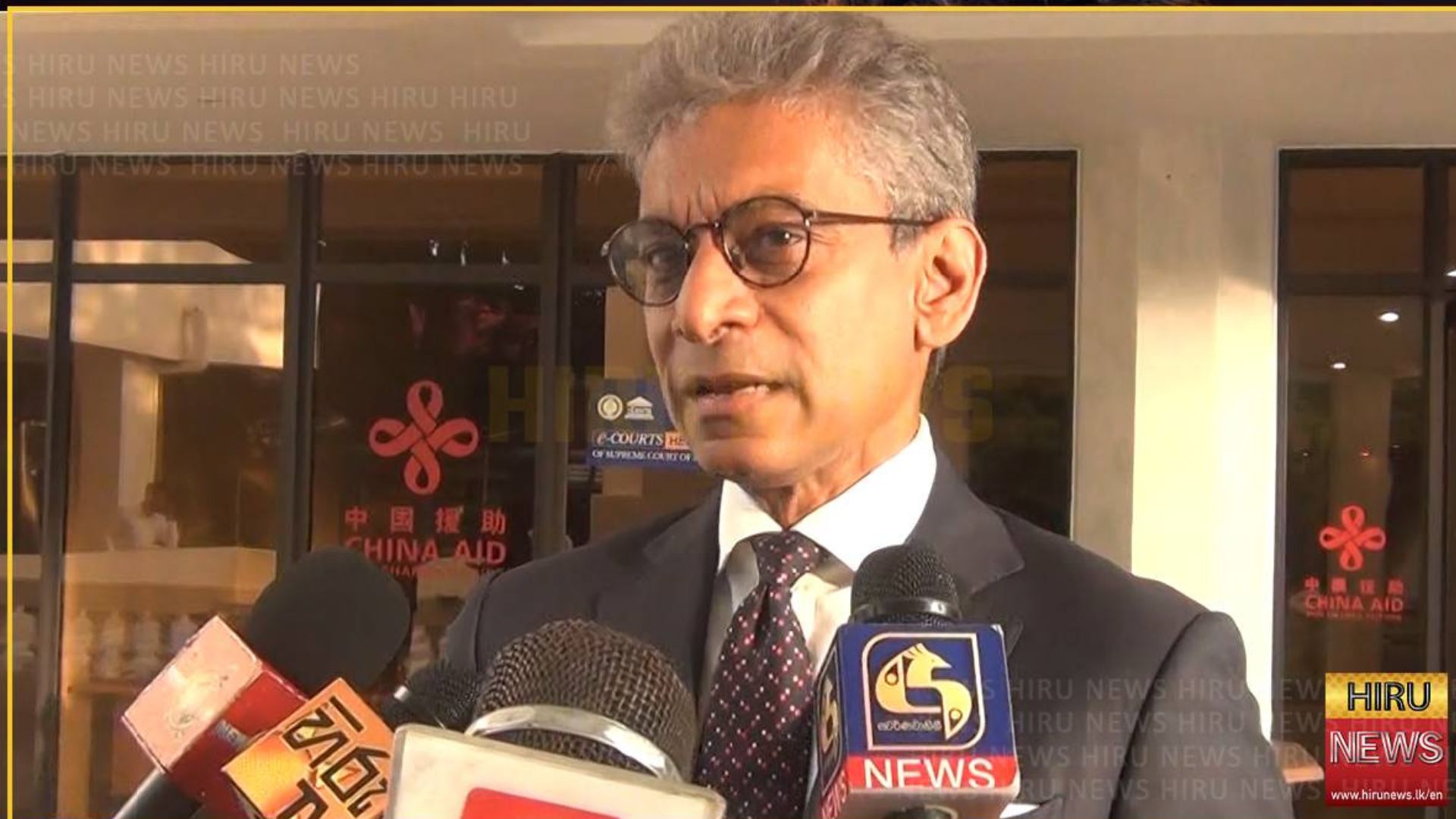
27. Following the conclusion of the proceedings on 2 September 2026, I was interviewed by members of the press outside the Court. In response to questions, I gave a summary of my observations concerning the proceedings and the matters that had come to my attention during my attendance at the Court. My comments were confined to these observations and did not seek to express any concluded view on the merits of the petitions or on matters that remain for determination by the Supreme Court. However, I did emphasise the importance of preserving judicial independence and the dangers of undermining the judiciary, which is the last bastion of protection for litigants seeking justice from the courts.
28. I subsequently sought to engage with relevant public office-holders concerning the importance of preserving public confidence in the independence of the judiciary.
29. I therefore reached out to the Hon. Harshana Nanayakkara, the Minister of Justice and National Integration, and the Hon. Sajith Premadasa, Leader of the Opposition, with a view to meeting them on 4 September 2026 to discuss the importance of preserving and strengthening public confidence in judicial independence and impartiality.
30. The Minister of Justice and National Integration informed me that he was unable to meet as he was not in Colombo on 3 September 2026. I enquired whether it might be possible for me to meet with another person whom he might wish to designate for this purpose. He indicated that he would endeavor to make such arrangements, but I did not receive a further response before the conclusion of my visit.
31. Separately, I also contacted the Secretary to the Ministry of Justice and National Integration, Ayesha Jinasena PC, seeking an opportunity to meet on 3 September 2026. Regrettably, I did not receive a response to that request.
32. I was, however, able to meet with the Hon. Sajith Premadasa, Leader of the Opposition. Our discussion included the importance of maintaining public confidence in the independence and impartiality of the judiciary. During the course of the meeting, he also expressed an interest in environmental issues and matters relating to climate justice. I informed him that the CLA has a dedicated Climate Justice Committee that is available to provide advice and assistance, where appropriate, on such matters.
33. I completed the meetings and my visit on 3 September 2026.
34. Also on 3 September 2026, the BASL filed a motion before the Supreme Court stating that it would not tender post-hearing written submissions, referring, among other matters, to the Supreme Court’s decision not to permit oral submissions in reply on 2 September 2026. Additionally, it has been reported that a number of the other Petitioners would similarly not tender written submissions. This development occurred after the oral hearing observed for the purposes of this report and is therefore noted separately from the observations set out above.
Conclusion
35. The importance of judicial independence is well illustrated by the observations of the Supreme Court of Sri Lanka in Visuvalingam and Others v. Liyanage and Others, [1983] 1 Sri L.R. 203. The following passage is particularly pertinent:
The main aspirations of the Constitution are set down in its luminous preamble. Rule of law is the foundation of the Constitution and independence of the judiciary and fundamental human rights are basic and essential features of the Constitution. It is a lesson of history that the most valued constitutional rights pre-suppose an independent judiciary, through which alone they can be vindicated. There can be no free society without law, administered through an independent judiciary. It is and should be the pride of a democratic government that it maintains and upholds independent courts of justice where even its own acts can be tested. The supremacy of the Constitution is protected by the authority of an independent judiciary to act as the interpreter of the Constitution.
36. In conclusion, the proceedings were conducted within a particularly compressed constitutional timeframe and involved questions of considerable constitutional significance. The observations set out in this report are not intended to express a concluded view on the merits of the petitions or on the matters ultimately to be determined by the Supreme Court. They do, however, identify a number of procedural matters which, in my view, merit careful scrutiny in the interests of procedural fairness, transparency, and public confidence in the administration of justice.
37. In matters concerning the Constitution and the independence of the judiciary, it is especially important that the process by which judicial decisions are reached commands confidence, including confidence in the impartiality of the judges, the composition of the bench, and the opportunity afforded to the parties to present their respective cases.
38. The preservation of such confidence in the judiciary and the administration of justice is not only important to the parties before the court, but is fundamental to the maintenance of the rule of law, and the independence and standing of the judiciary.
Steven Thiru
President
Commonwealth Lawyers Association
7 September 2026
Read the CLA’s press statement dated 11 June 2026 here
Photo credit: Hiru News