

CLA News / From Principle to Protection: Strengthening the Environmental Rule of Law by Steven Thiru, President, Commonwealth Lawyers Association

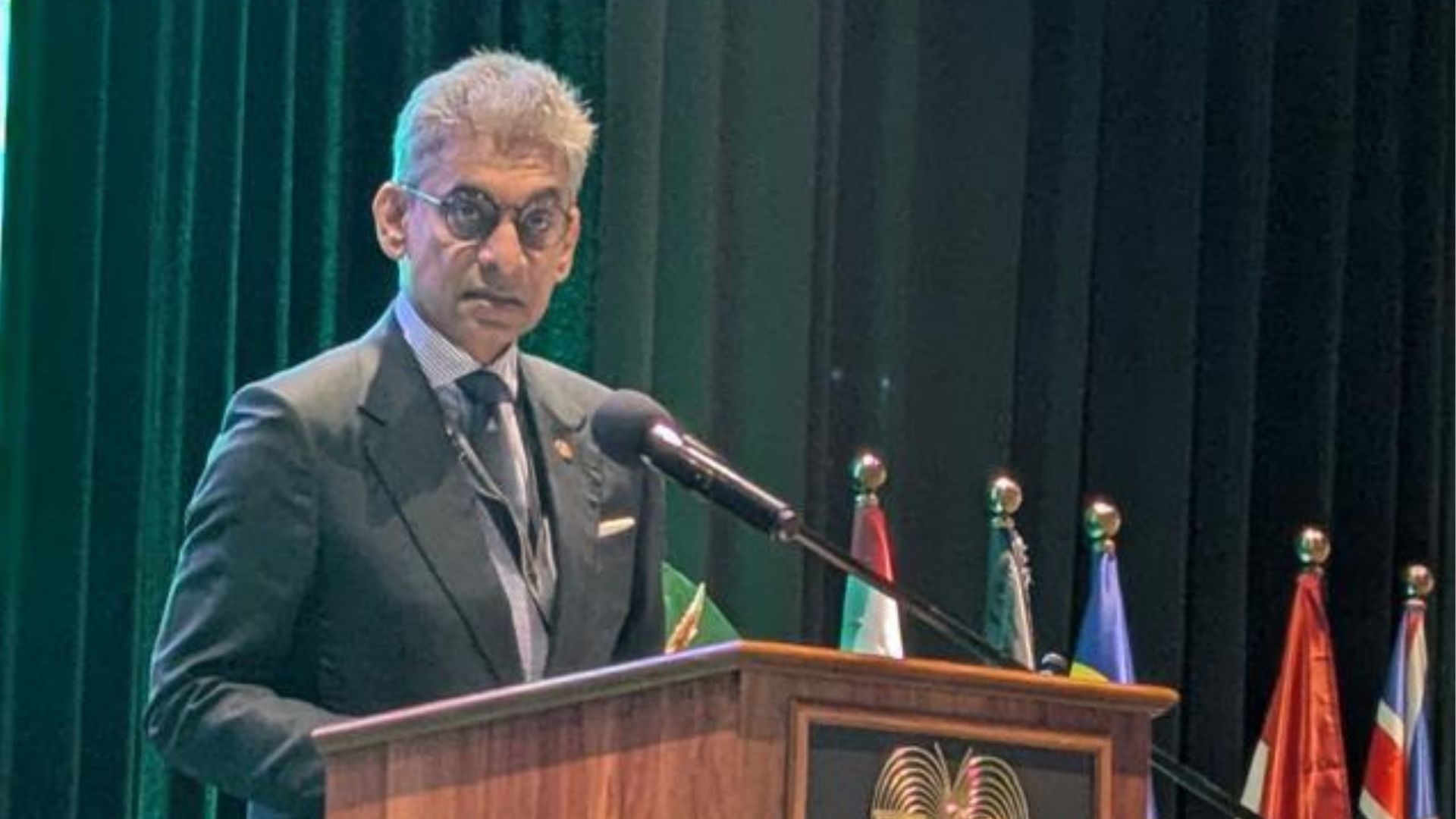
These welcome remarks were delivered by CLA President Steven Thiru on 20 August 2026 at the LAWASIA Environmental Law Conference 2026 held from 19 to 21 August 2026 in Port Moresby, Papua New Guinea.
The Hon James Marape, MP, Prime Minister of Papua New Guinea, and Member for Tari Pori,
Sir Gibuma Gibbs Salika GCL KBE CSM OBE, Chief Justice of Papua New Guinea, Supreme and National Courts of Papua New Guinea,
The Hon Justice Ambeng Kandakasi GCL, CBE, Deputy Chief Justice of Papua New Guinea,
Mr Yap Teong Liang, President of LAWASIA,
Mr Hubert Namani, President of the Papua New Guinea Law Society,
Mr William Wylie Clarke, Chair of the South Pacific Lawyers Association,
Distinguished guests, esteemed delegates, colleagues, ladies and gentlemen,
Good evening.
It is a privilege to stand before you today on behalf of the Commonwealth Lawyers Association (‘CLA’) to deliver these welcoming remarks at the LAWASIA Environmental Law Conference 2026.
Allow me at the outset to express my heartfelt gratitude to LAWASIA, the Papua New Guinea Centre for Judicial Excellence, and the Papua New Guinea Law Society for organising this Conference and for extending a warm invitation to the CLA to participate.
Convening a gathering of this magnitude — bringing together legal luminaries, jurists, scholars, and advocates from across the region — is a substantial achievement and a powerful service to the rule of law and to the future of our shared planet.
Papua New Guinea’s Leadership in Global Climate Jurisprudence
Our presence here today is especially poignant. Papua New Guinea, like many of its Pacific neighbours, is at the centre of the global climate crisis. Yet, rather than being defined by vulnerability, the country has consistently demonstrated courageous leadership in advancing climate justice on the international stage.
We saw an inspiring manifestation of this leadership in Papua New Guinea’s written submissions to the International Court of Justice (‘ICJ’) in the landmark Advisory Opinion on the Obligations of States in respect of Climate Change. In it, Papua New Guinea articulated a fundamental truth that ought to guide our deliberations over the next few days. I quote:
With respect to the second part of the question, Papua New Guinea submits that human rights are universal, indivisible, interdependent and interrelated. Accordingly, the right to a clean, healthy and sustainable environment is integral to the full and effective enjoyment of all human rights by present and future generations.
By framing the right to a clean, healthy, and sustainable environment as intrinsically linked to the entire corpus of fundamental human rights, Papua New Guinea reminded the international community that environmental degradation is not an abstract policy issue; it is an existential human rights challenge.
It is precisely this vision and intellectual rigour that the Papua New Guinea Centre for Judicial Excellence and the Papua New Guinea Law Society bring to this Conference. I thank them most sincerely for co-hosting this event and for continuing to champion rule-of-law solutions to environmental crises both regionally and internationally.
Advancing the Sabah Declaration on Climate Justice
For the CLA, our involvement in this Conference represents a natural continuation of our enduring commitment to environmental justice.
On 28 February 2024, the CLA co-hosted the Borneo Rainforest Law Conference at the Sabah International Convention Centre in Kota Kinabalu, Malaysia. That three-day gathering convened legal practitioners and judges from across the Commonwealth to address the urgent threats posed by deforestation, biodiversity loss, and global warming.
Its lasting legacy was the adoption of the seminal Sabah Declaration on Climate Justice.
The Sabah Declaration served as an urgent call to action for the legal profession across the Commonwealth. It underscored the compelling need to strengthen legal frameworks, enhance judicial capacity, and proactively protect climate-vulnerable groups, including Indigenous communities, coastal populations, women, and future generations, who bear the disproportionate burden of climate impacts despite contributing the least to them.
The principles enshrined in the Sabah Declaration affirm that lawyers and judges are not passive observers in the face of climate breakdown; we are duty-bound custodians of justice. It urged member jurisdictions to adopt rights-based approaches to climate litigation, support sustainable resource management, and champion environmental accountability.
Today, as we gather under the banner of LAWASIA in 2026, we carry the spirit of the Sabah Declaration into these halls. Our mission remains unchanged: to convert legal principles into practical protection for our ecosystems and vulnerable communities.
From Dialogue to Environmental Action
Ladies and gentlemen, the environmental challenges confronting the Asia-Pacific region — rising sea levels, extreme weather events, biodiversity loss, and growing pressures on land, water, and natural resources — demand robust, innovative, and coordinated legal responses. This Conference provides an indispensable platform to achieve just that, with deliberations that will be centred on the core theme of the ‘Environmental Rule of Law’: what it truly means, how it is operationalised, and how we, as a global legal community, can steadfastly uphold it.
Over the next few days, our discussions will unpack the foundational normative principles of environmental governance and address how these principles can be translated into functioning, accountable institutions across our jurisdictions. We will confront the critical implementation gap by exploring pathways to align international commitments with domestic enforcement, and by examining emerging trends in hybrid environmental governance; environmental, social, and governance (‘ESG’) frameworks; and rights-based protections for Indigenous communities. Crucially, we will also address the grave threats facing the rule of law today, paying particular attention to protecting environmental human rights defenders and lawyers from strategic lawsuits against public participation (‘SLAPPs’) and systemic intimidation.
The true value of this gathering lies in its capacity to transform high-level dialogue into tangible legal and institutional outcomes. The insights exchanged, legal strategies debated, and professional partnerships forged over these three days will directly inform how we frame arguments before the courts, draft progressive legislation, advise our clients, and deliver bold, principled judgments. This Conference therefore serves as a vital catalyst for strengthening the environmental rule of law across the region.
A Shared Commitment to Climate Justice
As President of the CLA, I reaffirm our unwavering support for LAWASIA, the Papua New Guinea Centre for Judicial Excellence, and the Papua New Guinea Law Society. The CLA stands shoulder to shoulder with you in advocating for climate justice, human rights, and the rule of law.
To all our delegates, may this Conference be a resounding success, marked by fruitful discussions, meaningful connections, and a renewed collective resolve to safeguard our shared home for present and future generations.
Thank you very much, and I wish you all an enriching and impactful Conference.
Steven Thiru
President
Commonwealth Lawyers Association
20 August 2026
Steven Thiru records his appreciation to Jaishanker Sadananda and Chin Oy Sim for their assistance in preparing these remarks.