
CLA News / Africa Legal Forum Plenary 1: Practising Across Borders: Unlocking Africa’s Legal Markets

Africa’s legal markets are full of opportunity. So what is holding lawyers back from crossing borders?
At the opening plenary of the Africa Legal Forum 2026 in Kigali, speakers from Rwanda, Kenya and Egypt tackled the realities of cross-border legal practice—from trust and business culture to regulatory barriers, different legal systems and access to new markets.
The message was clear: unlocking Africa’s legal potential requires more than opening borders. It demands collaboration, reciprocity and a willingness to build trust across jurisdictions.
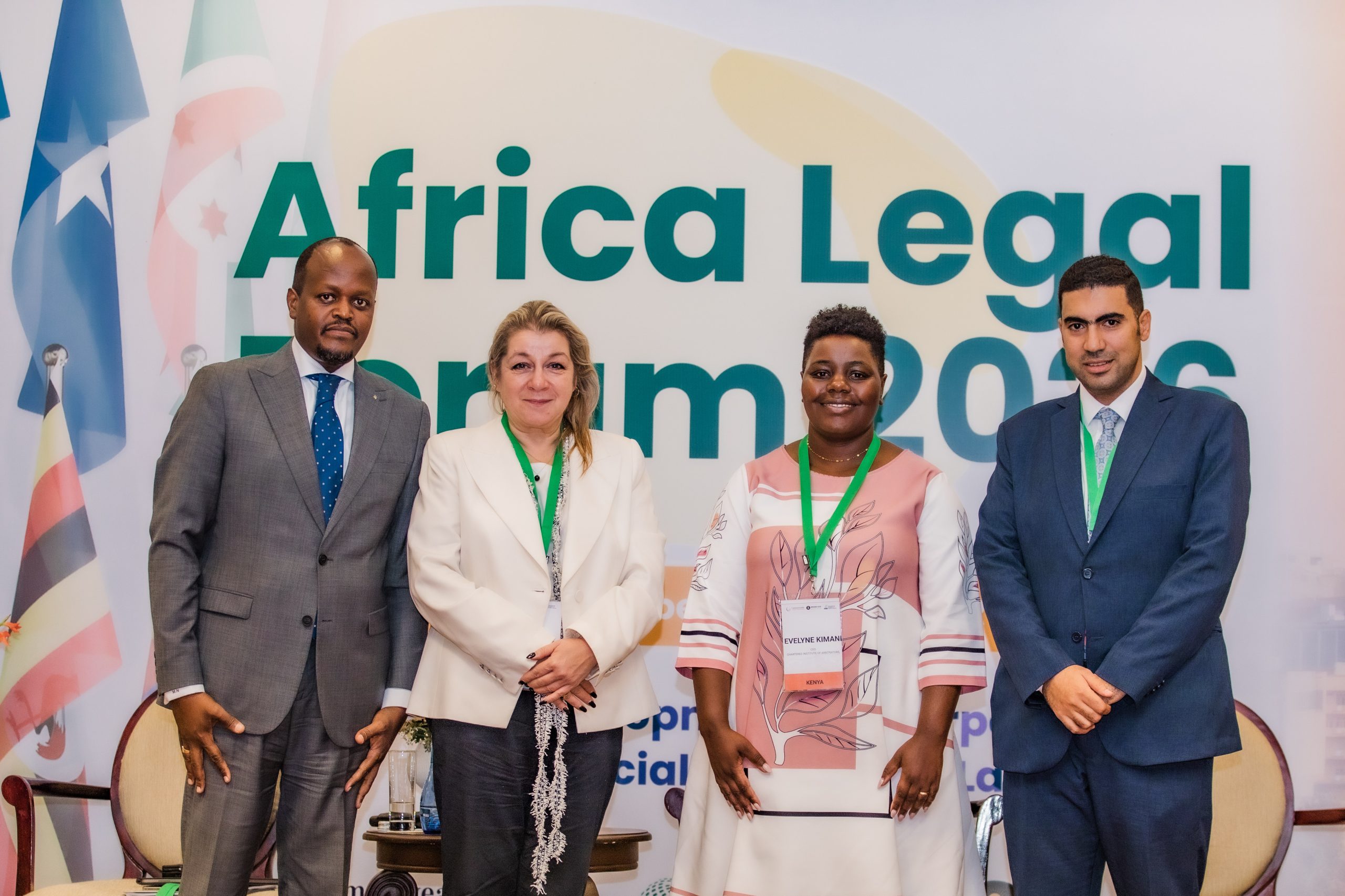
The discussion brought together Mohammed Hassenein, Egyptian lawyer, Managing Partner of Hassenein & Co., Vice-President for North Africa at PALU and Fellow of the International Academy of Family Lawyers (IAFL); Bâtonnier Moïse Nkundabarashi, President of the Rwanda Bar Association; and Evelyn Kimani, Acting CEO of the Chartered Institute of Arbitrators (CIArb).
Understanding the market: business, culture and trust
Mohammed Hassenein challenged lawyers to recognise that legal practice is also a business. Justice and professional ethics remain fundamental, but practitioners must understand the commercial realities, cultural expectations and practical challenges of the markets in which they operate.
Unpredictable timelines, pressure on justice systems and inefficient banking arrangements can make it difficult to offer clients the certainty they expect. Lawyers must be adaptable, understand local business practices and build trusted relationships to navigate these realities effectively.
Dr Hassenein also highlighted the importance of established networks and trusted intermediaries where conventional financial systems may not operate efficiently. For lawyers looking to expand across borders, understanding how business is conducted locally is just as important as knowing the law.
Opening markets, not closing doors
Bâtonnier Moïse Nkundabarashi highlighted the considerable opportunities for lawyers to expand their practices through regional partnerships and professional networks. Rwanda’s experience of admitting foreign lawyers from across the region demonstrates the potential for greater cross-border collaboration.
Yet differences between legal systems can create significant challenges. Lawyers moving between common law and civil law jurisdictions may need time to understand unfamiliar procedures and ways of working. While restrictions can be intended to protect domestic markets, they can also limit opportunities for local practitioners to work internationally.
The challenge for bar associations is to find ways to accommodate these differences without allowing them to become unnecessary barriers. Through stronger professional networks, collaboration and greater harmonisation, institutions can help lawyers access opportunities across jurisdictions while respecting national legal traditions.
Trust, infrastructure and access: the keys to progress
Evelyn Kimani identified three priorities for unlocking Africa’s cross-border potential: trust, infrastructure and access.
She highlighted the practical obstacles to intra-African collaboration, including costly and complicated travel connections. In some cases, travelling between African countries can be more difficult than travelling outside the continent, creating barriers to the professional relationships and commercial partnerships needed to grow regional markets.
Institutional reciprocity is equally important. Professional bodies can open up opportunities by welcoming practitioners from other jurisdictions into their networks rather than focusing exclusively on their own members.
Drawing on CIArb’s experience, Kimani described how engagement with arbitration institutions across Africa is helping to broaden professional connections and access to opportunities. Collaboration involving institutions in Kenya, Rwanda and elsewhere demonstrates how reciprocal arrangements can benefit practitioners across borders.
The ambition, she emphasised, must extend beyond professional networks. Improving regional connectivity, making travel easier and strengthening intra-African trade are essential to creating an environment in which cross-border legal practice can flourish.
Making alternative dispute resolution work across borders
The discussion also explored the growing role of alternative dispute resolution (ADR) in improving access to justice and supporting commercial activity.
In Kenya, CIArb is working with the judiciary, the Law Society of Kenya and the business community to strengthen arbitration capacity and encourage wider use of ADR. Training for judges and lawyers is helping build understanding of arbitration as an effective means of resolving disputes, alongside efforts to reduce over-reliance on litigation.
In Rwanda, the adoption of an ADR policy, an emphasis on court-annexed mediation and sustained training are helping to embed alternative mechanisms within the justice system. The Rwanda Bar Association is encouraging lawyers to engage with these processes as part of a broader shift towards more accessible and efficient dispute resolution.
However, ADR must reflect the context in which it operates. Dr Hassenein highlighted the particular sensitivities surrounding family law in Egypt, where arbitration is not permitted for family law matters and mediation remains underused. He pointed to work within the IAFL’s African network exploring how dispute resolution practices can develop in ways that meet the specific needs of family law.
Turning connections into lasting change
The opening plenary made clear that expanding cross-border legal practice in Africa is about more than removing regulatory restrictions. It requires a culture of trust, participation and reciprocity, supported by institutions willing to collaborate and practitioners prepared to understand different markets and legal traditions.
The Africa Legal Forum itself, convened by the Commonwealth Lawyers Association (CLA), IAFL and Rwanda Bar Association, provided a practical example of this collaboration in action.
The next step is to turn those connections into concrete opportunities. By strengthening professional networks, improving regional access, investing in ADR capacity and embracing reciprocal arrangements, Africa’s legal profession can build a more connected legal marketplace—one that supports the rule of law, advances access to justice and enables lawyers and businesses to thrive across borders.
The challenge is for bar associations, legal institutions and practitioners to work together to ensure that differences between jurisdictions become opportunities for collaboration, rather than barriers to progress.