
CLA News / Africa Legal Forum Plenary 6: AI and the African lawyer: Opportunity, Risk and Regulation

AI can draft the argument, analyse the evidence and accelerate legal research. But who takes responsibility when it gets it wrong? And what happens when lawyers begin to outsource the very judgement that defines their profession?
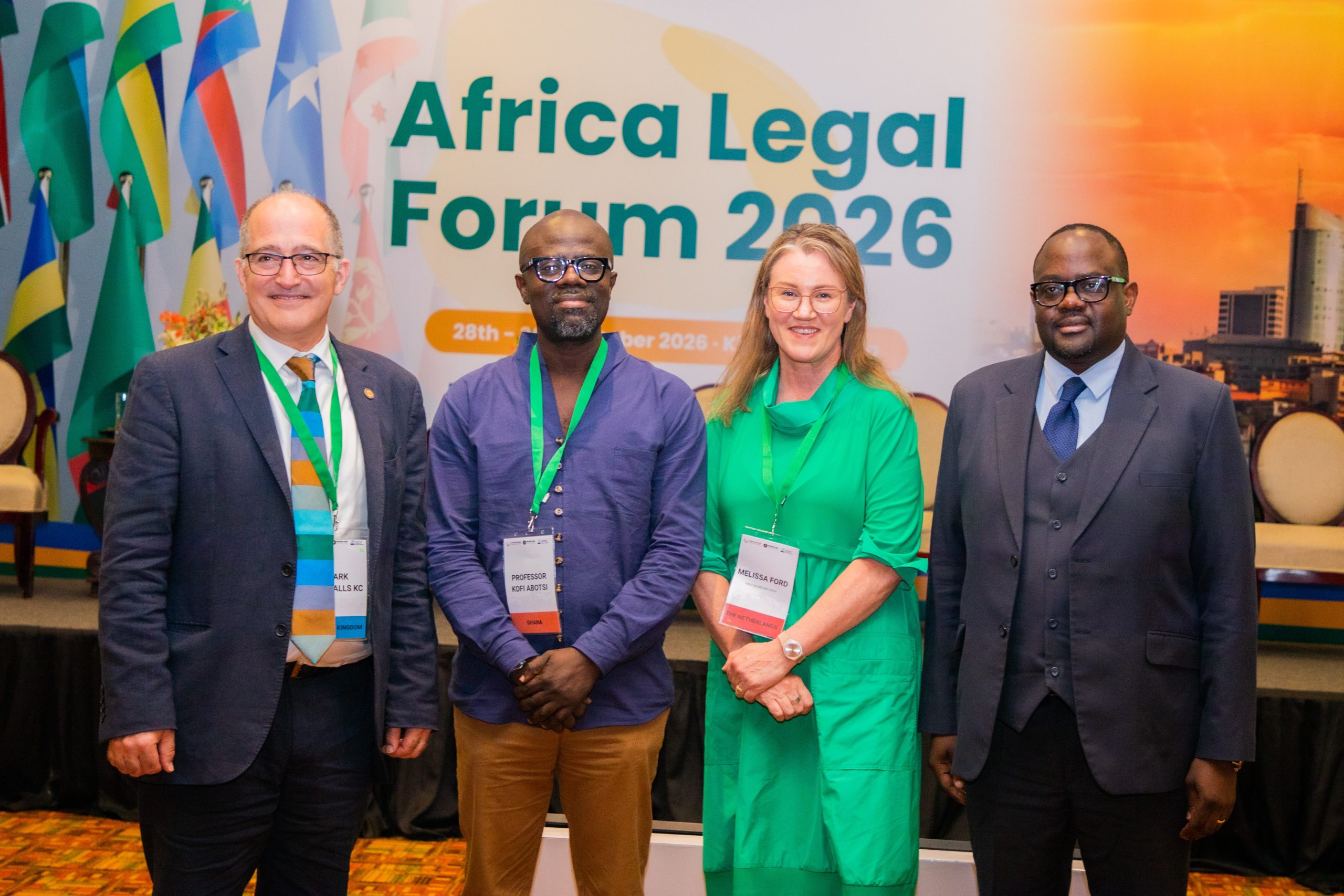
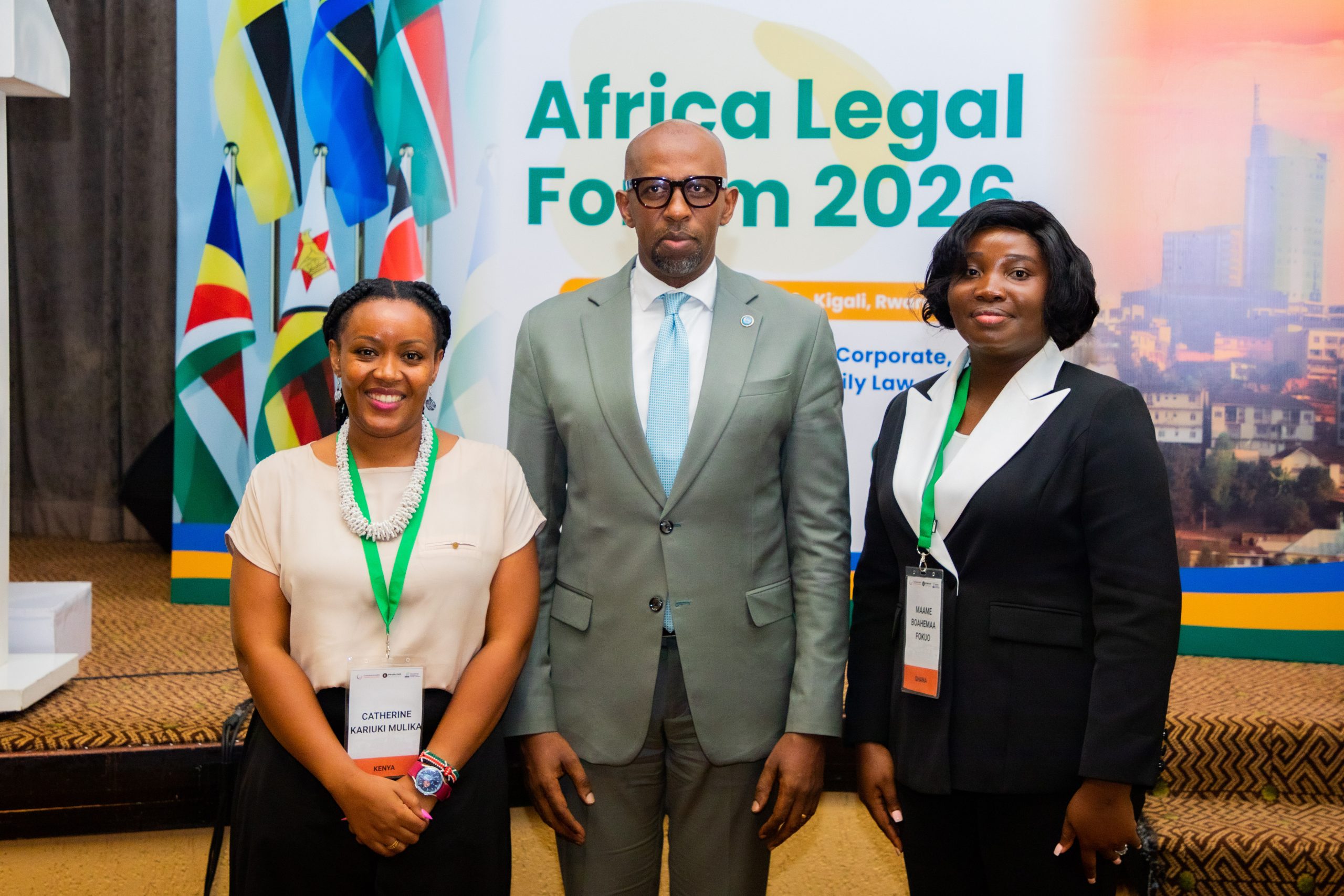
These questions took centre stage at Plenary 6, AI at the Bar, at the Africa Legal Forum in Kigali. Moderated by Dr Peter Maynard, the discussion brought together Masoud S. M. Said Al Zakwani, Vice-President of the East Africa Law Society; Kenneth Wyne of CIArb Kenya; and Peter Maynard to examine how AI is reshaping legal practice, arbitration and access to justice across Africa.
The opportunities are considerable. So are the risks.
Efficiency comes at a price
Opening the discussion, Masoud warned that we are living in an era in which everyone can feel like an expert on everything, fuelled by growing reliance on AI.
Citing Goldman Sachs research from 2025, he highlighted estimates that 300 million jobs globally could be exposed to automation by 2030. For lawyers, the implications are impossible to ignore.
AI is already accelerating legal research and large-scale document review. But it is also creating new pressures. Clients increasingly arrive with AI-generated drafts and lengthy submissions, much of which may be irrelevant or require substantial correction. Meanwhile, AI agents are enabling clients to generate work before their lawyers have even responded.
Standardised and repetitive services, including contract drafting and review, are particularly vulnerable to disruption.
The challenge, Masoud argued, is to embrace the efficiency AI offers without compromising accuracy or professional standards. Lawyers cannot afford to become complacent or assume that faster means better.
Arbitration: Can AI assist without undermining due process?
Kenneth Wyne of CIArb Kenya brought a distinctive arbitration perspective, examining AI’s potential influence across the entire arbitral process – from recording and transcribing hearings to categorising evidence, organising submissions and potentially informing tribunal decision-making.
But the greater AI’s involvement, the more pressing the questions around due process, party autonomy and the integrity of arbitral awards.
Arbitration is built on trust. Parties appoint an arbitrator expecting that individual to exercise independent judgement and take personal responsibility for deciding their dispute. What happens to that relationship when machine assistance becomes part of the decision-making process?
Wyne cautioned arbitrators against relying on AI simply because it might produce a richer or more reasoned decision. The commitment made to the parties is that the arbitrator will personally undertake the decision-making. That responsibility cannot be delegated to a machine.
Confidentiality presents another significant challenge. Arbitrators and legal representatives must consider the risks of entering sensitive case information into AI platforms.
Wyne advocated safeguards at both institutional and tribunal level, pointing to Kenya’s draft judicial policy on AI, which addresses decision-making, disclosure, accountability and confidentiality.
At tribunal level, he recommended addressing AI use at preliminary meetings and through case-management directions, establishing clear expectations around permitted use, disclosure and the risks of AI hallucinations – where systems generate convincing but inaccurate information.
Where parties depart from agreed directions, tribunals must consider how those departures should be treated, just as they would other procedural deviations.
There is also a question of equality of arms. AI may reduce the time and cost involved in arbitration, but unequal access to increasingly sophisticated tools could create new disadvantages between parties.
AI may assist the arbitral process, but responsibility for a fair hearing and a defensible award remains firmly with the arbitrator.
When AI gets it wrong, the lawyer remains accountable
The risks of unverified AI-generated legal material are no longer theoretical.
Masoud highlighted a recent Tanzanian case in which a lawyer relied on two fictitious case authorities. When challenged, the lawyer acknowledged that the necessary research had not been undertaken. Although the judgment did not directly establish AI use, the judge reportedly described the citations as allegedly AI-generated.
The example brought the discussion sharply back to professional responsibility.
Masoud’s position was unequivocal: if lawyers rely on and adopt information, they remain accountable for it. AI does not transfer or diminish their professional duties.
Technology will evolve, but the duty of competence remains with the lawyer. Meeting deadlines and delivering client mandates efficiently cannot justify sacrificing accuracy, professionalism or justice.
Who trains the next generation of lawyers?
One of the panel’s most thought-provoking exchanges concerned the impact of AI on younger lawyers.
Traditionally, research, document review and drafting have provided interns and junior practitioners with essential opportunities to develop their legal skills. Increasingly, those tasks are being automated.
Masoud posed an important question: how can the profession tell young lawyers to think independently and avoid over-reliance on AI while simultaneously removing the very opportunities through which they learn to do so?
Maynard highlighted a generational distinction. More experienced lawyers tend to approach AI from an oversight perspective, while younger practitioners may approach it primarily as an efficiency tool.
The danger is that the next generation could become proficient at producing answers without acquiring the research discipline, analytical rigour and independent judgement needed to understand them.
The discussion also highlighted the importance of developing prompt-engineering skills: the quality of AI-generated output depends significantly on the questions asked and how effectively instructions are framed.
The challenge for legal education and professional development is therefore twofold: equip lawyers to use AI competently while protecting the critical thinking that makes them effective practitioners.
As Masoud recalled from an earlier EALS conference, lawyers must combine professional skills and technological capability to become humanly indispensable.
Bar associations must help shape the rules
The panel argued that professional associations cannot simply wait for governments and regulators to determine the future of AI in legal practice.
Masoud highlighted the East African Law Societies’ engagement with the East African Community, including its observer status and dialogue with governments across the region.
EALS has already held several AI masterclasses for members, with another planned in Zanzibar at the end of November. There are also preliminary discussions with regional institutions about developing guiding principles for AI in legal practice, building on the African Union’s 2025 human rights guidelines.
The possibility of an MOU with a technology partner to establish minimum criteria for AI tools used in legal practice was also raised.
An audience question from practising lawyer Sharif Yusuf Mogabi brought this issue into sharper focus: should professional associations develop a formal instrument setting standards for AI tools entering the legal market?
It is a question that goes beyond individual lawyers choosing which platforms to use. Professional bodies have an opportunity to influence the standards, safeguards and accountability mechanisms that will govern the profession’s relationship with AI.
But regulation alone is not enough. Lawyers must also receive the training to understand the technology they are being asked to use.
Can AI make justice more accessible?
Perhaps the greatest opportunity discussed was AI’s potential to reduce the cost of legal services and bring justice closer to underserved communities.
Masoud highlighted everyday challenges facing rural communities, including inheritance disputes, property issues, obtaining birth certificates and accessing government services.
He cited the example of Zambia’s Talk to the President application, explaining how AI has helped improve the way people engage with government services.
Properly deployed, AI could make information and services more accessible, reduce administrative barriers and help lower the cost of accessing justice.
But connectivity remains a major obstacle. Masoud highlighted figures from Tanzania’s telecommunications regulator indicating mobile penetration of 89.5%, while other reports suggest that only 21–30% of people have internet access.
The distinction matters. Without affordable connectivity and wider digital inclusion, the benefits of AI will remain beyond the reach of many of the communities that stand to gain most.
Masoud challenged lawyers and professional associations not to wait for governments to act. The profession has its own mandate to advance access to justice and must be part of the conversations shaping how technology is deployed.
Who owns Africa’s AI future?
The discussion also extended beyond the adoption of existing AI tools to a bigger question of technological sovereignty.
An audience contribution from David raised the challenge of Africa developing its own AI capabilities rather than relying exclusively on models built around European and American legal frameworks.
If AI systems are trained predominantly on foreign legal materials and narratives, how effectively can they understand African legal systems, jurisprudence and contexts?
The response highlighted the need to make this a compelling business case: Africa must ensure its own legal materials, expertise and decision-making frameworks are represented in the development of global AI models.
It is not enough to be a consumer of technology. African lawyers and institutions must help shape it.
The future must be shaped by the profession
Plenary 6 delivered a clear message: the legal profession cannot afford either to fear AI or to embrace it uncritically.
The opportunities are transformative, from more efficient legal practice and arbitration to potentially wider access to justice. But realising that potential requires investment in skills, ethical safeguards, secure systems, responsible regulation and digital inclusion.
For lawyers, the fundamental obligation remains unchanged: verify the information, exercise independent judgement and remain accountable for the advice and decisions they deliver.
AI may change how we practise law. It must never replace the judgement, integrity and human responsibility at its heart.