CLA News / Africa Legal Forum Plenary 7: ESG in Africa: Compliance, Capital and Competitive Advantage

ESG is no longer simply a matter of corporate responsibility. It is increasingly shaping investment decisions, regulatory obligations and Africa’s competitive position in the global economy.
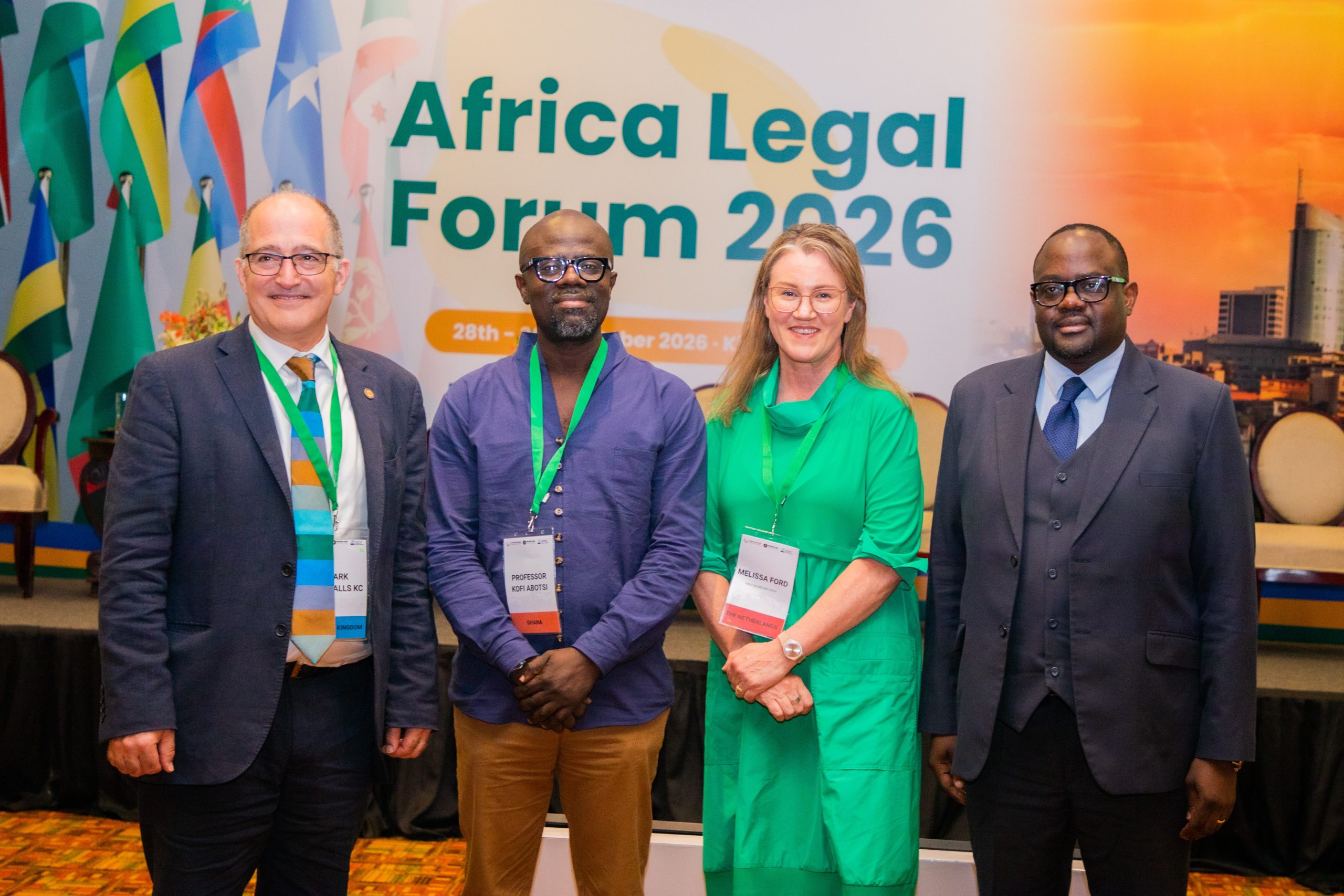
That was the central message of Plenary 7 at the Africa Legal Forum in Kigali, ESG in Africa: Compliance, Capital and Competitive Advantage, chaired by Kofi Abotis, with Mark Fenhalls KC, Julien Kavaruganda and Melissa Ford examining what ESG means in practice for African countries, businesses and the legal profession.
Opening the discussion, Mark Fenhalls KC challenged delegates to consider a fundamental question: what is the point of ESG – and what does it demand of us?
He began by highlighting Africa’s changing place in the global conversation. A recent UN vote and the revised representation of the world map offered a reminder of the continent’s scale and significance. With populations growing across parts of Africa, while India faces demographic change and Europe an ageing population, the continent’s importance to the future global economy cannot be overlooked.
These demographic shifts, he argued, make the relationship between environmental sustainability, social responsibility and economic development increasingly significant.
From voluntary principles to legal accountability
ESG has its roots in a UN initiative around 25 years ago, which sought to establish principles for responsible investment. Since then, countries have developed their own frameworks and guidelines, alongside growing international concern about climate change, the Paris Agreement and the wider environmental agenda.
But what began largely as voluntary guidance is increasingly finding its way into regulation, litigation and corporate obligations.
For lawyers, this presents a growing challenge: understanding the different regulatory frameworks across jurisdictions and advising clients on what compliance means in practice.
Mark encouraged delegates to move beyond asking simply what businesses must do. The more important questions are what they can do, what they should do, and how their decisions will affect future generations.
He introduced what he called the “granddaughter test”: imagine a conversation with your 12-year-old granddaughter 30 years from now. When she asks what you did during the climate crisis, what will your answer be?
It is a question that places professional and corporate responsibility into a much wider human context.
The law is beginning to bite
Marlk illustrated the shift from voluntary ESG principles to enforceable obligations through developments in English environmental law.
One landmark example was the UK Supreme Court’s 2024 judgment in R (Finch) v Surrey County Council. The case concerned proposals for oil extraction at a site in the Surrey Hills, where local residents challenged the planning authority’s decision.
The Supreme Court held that the environmental impact assessment had to consider not only emissions from extracting the oil, but also the greenhouse gas emissions resulting from burning the oil once produced.
The decision has important implications for environmental assessments and planning decisions, demonstrating how climate considerations can have a direct impact on development and investment.
He also highlighted the UK’s Environment Act 2021 and its introduction of mandatory biodiversity net gain requirements for many developments in England. Developers must now demonstrate that projects deliver measurable improvements to biodiversity, rather than simply limiting environmental harm.
These developments raise important questions for African jurisdictions: how might similar approaches work in their own legal and regulatory systems, and how can environmental obligations be incorporated into development without losing sight of economic realities?
ESG is also about everyday legal practice
The discussion brought ESG firmly into the day-to-day work of lawyers.
Mark challenged employment lawyers to consider whether employment contracts and corporate governance arrangements adequately address environmental responsibilities. Could contracts encourage reduced carbon consumption, recycling and more sustainable business practices?
He also pointed to the relationship between environmental conditions and public health, referencing an inquest following the death of a young girl with asthma, in which road pollution was a contributing factor.
In Rwanda, the growing use of electric motorbikes offers a practical example of how cleaner transport can reduce both emissions and noise. Lawyers, he suggested, should be asking clients not only how to comply with environmental requirements, but how to make more sustainable choices in the products they purchase and the businesses they build.
ESG, therefore, is not confined to specialist environmental lawyers. It has implications across commercial transactions, employment, property, planning, public law and corporate governance.
Holding powerful actors to account
The panel also explored the growing role of climate litigation as a mechanism for corporate accountability.
Melissa Ford highlighted the increasing visibility of climate-related claims and litigation against corporate actors, particularly where businesses are alleged to have failed to meet their environmental responsibilities. Litigation is becoming an increasingly important means of challenging conduct, raising public awareness and testing the boundaries of corporate accountability.
The discussion extended to the responsibilities of governments and major international companies. Examples included environmental damage associated with mining operations and the destruction of forests linked to major infrastructure developments.
The question was a challenging one for the Commonwealth: how effectively are governments and legal systems holding powerful corporate actors to account, particularly where investment, employment and economic development are at stake?
The African challenge: investment, harmonisation and long-term thinking
Turning to the Commonwealth context, Kofi Abotsi invited Julien to consider where the greatest ESG gaps lie across a Commonwealth made up predominantly of developing countries.
Julien identified harmonisation as a key challenge. Differing regulatory approaches can make compliance difficult for businesses operating across borders and create uncertainty for investors.
But the issue is not simply regulatory. Political and economic pressures also play a significant role. Governments seeking investment, employment and economic growth may face difficult choices when an investment promises immediate economic benefits but carries longer-term environmental or social costs.
How can countries attract the capital they need while ensuring that investment supports sustainable development rather than creating liabilities for future generations?
This is where lawyers have a critical role: helping governments and businesses navigate competing obligations, build effective governance frameworks and understand the long-term consequences of commercial decisions.
A competitive advantage – not just a compliance exercise
The discussion made clear that ESG should not be viewed solely as another regulatory burden. For African economies, it presents an opportunity to attract responsible investment, strengthen institutional accountability and build more resilient businesses.
The challenge is to develop frameworks that are credible, workable and sensitive to the different economic circumstances of Commonwealth jurisdictions, while ensuring that environmental and social responsibilities are not sidelined in the pursuit of growth.
Ultimately, the question posed by Mark Fenhalls “what will we tell the next generation about what we did?” – offered a fitting conclusion to a discussion about the future of ESG in Africa.
For the legal profession, the message was clear: ESG is no longer someone else’s responsibility. It is becoming an essential part of how lawyers advise, how businesses operate, how governments regulate and how Africa competes.