


CLA News / Young Commonwealth Lawyers Newsletter — Edition on Artificial Intelligence and the Law [September], 2026

“There are two types of lawyers: those who use AI, and those who lie that they don’t.”
I have found myself saying this more often than I expected over the past year. It is, of course, deliberately provocative. But there is a serious point behind the joke. Artificial intelligence is no longer a question that belongs to the future of the legal profession. It is already here—in legal research, drafting, transcription, document review, evidence, dispute resolution and, increasingly, in the administration of justice itself. The real question is no longer whether lawyers will encounter AI, but how responsibly they will use it.
It is therefore a privilege to serve as Editor-in-Chief of the inaugural edition of the Young Commonwealth Lawyers Newsletter. When the call for contributions was issued on the theme of Artificial Intelligence and the Law, I expected an interesting collection of articles. What I did not anticipate was how much I would learn from reading them. Each contribution approaches AI from a different legal, institutional or human perspective, and together they offer a fascinating snapshot of a profession trying to understand a technology that is developing faster than the rules governing it.
My own perspective on AI has largely been shaped by constitutional and public law. At its heart, law is about the relationship between power and the individual, and about ensuring that the exercise of power remains subject to principle, reason and accountability. AI makes that task both more complicated and more important. An algorithm may identify patterns, process enormous quantities of information and perform certain tasks with remarkable speed. But it cannot, by itself, assume the moral or legal responsibility for the consequences of a decision.
Oliver Wendell Holmes Jr.’s observation that “the life of the law has not been logic; it has been experience” therefore seems particularly apt today. Law is not simply a system for processing information. It is an institution shaped by human experience, judgment, fairness and the consequences that decisions have upon real lives. AI may assist the lawyer or judge, but it cannot make the human responsibility of law disappear.
That tension runs through the contributions in this edition.
We begin with President Steven Thiru’s contribution on Gender-Based Violence Against Women and Girls in the Digital Age. His article is an important reminder that technology can be both empowering and dangerous. AI-generated deepfakes, sextortion, harassment, doxing and other forms of technology-facilitated abuse demonstrate how quickly technological capability can be weaponised against individuals, particularly women and girls. His discussion of judicial and regulatory responses, together with his priorities for reform, makes the article an important contribution to the conversation on digital safety and accountability.
Jason Lim Jie Sheng’s The Algorithm as Expert: Can AI Testify in Court? considers whether AI can occupy the role of an expert witness. His analysis of the Malaysian Evidence Act and comparative jurisprudence raises a fundamental question of responsibility: can a system that cannot itself be cross-examined, explain its reasoning or owe a duty to the court ever truly be an expert?
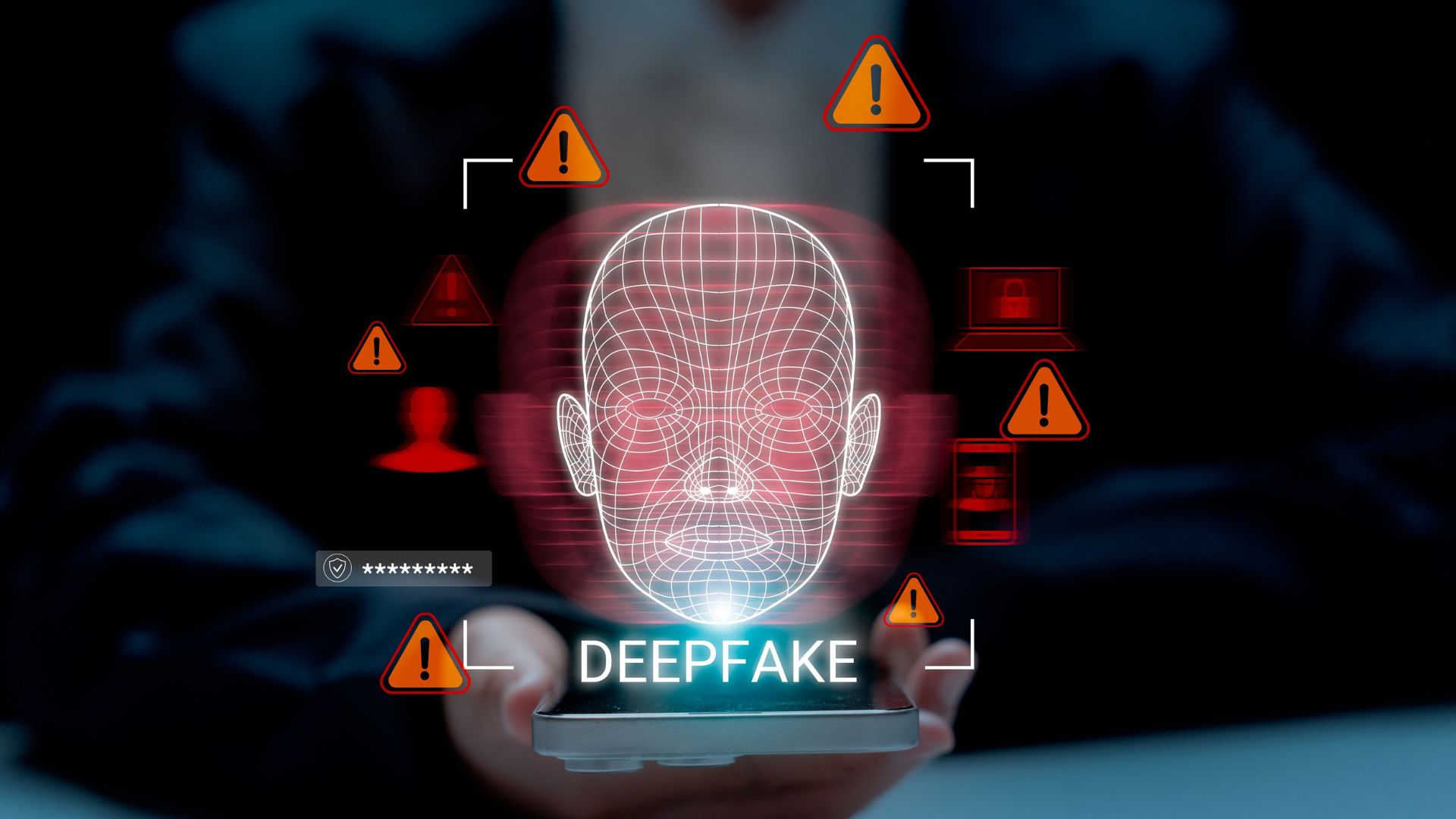
Ana Zdravković and Bojan Spaić examine another foundational problem in Deepfakes and Epistemic Authority in Adjudication: Who May Certify Reality? If technology can convincingly manufacture what appears to be reality, how does a court determine what can be trusted? Their proposal for a more structured and distributed approach to evidentiary authority offers a thoughtful response to a problem that is likely to become increasingly significant.
Utkarsh Kumar Sonkar’s The Algorithmic Scalpel turns to the practical challenge of judicial backlogs in India and asks how AI might assist courts without diminishing the role of the judge. His distinction between using AI to support judicial administration and allowing it to replace judicial reasoning goes to the heart of the question of human responsibility in an AI-assisted justice system.
Joel Hames’ Eavesdropping Algorithms considers AI in the context of mediation, ethics and confidentiality. His contribution reminds us that some of the most important questions raised by AI are not about what the technology can do, but about whether it should do it. In mediation, where confidentiality and trust are fundamental, the introduction of AI creates difficult questions about disclosure, data retention and professional responsibility.
Fadil Syed Hashmey takes the question into intellectual property in AI and Patents – The Thaler Judgment and the Question of Inventorship. His analysis of Thaler v Comptroller General of Patents demonstrates how traditional statutory concepts can be tested by technological developments that lawmakers may never have contemplated, raising the fundamental question of whether a machine can be recognised as an inventor.
The question of regulation is then considered through the contributions of Nitish Rai Parwani and Chrispin Bosire. Nitish’s A Case for Rooted AI Regulation in Commonwealth Courts asks whether AI governance should simply reproduce regulatory models developed elsewhere, or whether it must be grounded in local constitutional, institutional and social realities. Chrispin’s Homegrown Application of Artificial Intelligence Governance and the Emerging Gaps in Africa takes this inquiry further, emphasising the importance of coordination, enforcement and institutional capacity before new legislative frameworks are introduced. Together, their contributions raise an important Commonwealth question: how do we develop AI governance that is not merely imported, but genuinely responsive to the societies in which it operates?
Ooi Wei Qi’s From the Grassroots to the Frontier brings a particularly human dimension to the discussion. Reflecting on her experience as a first-generation lawyer, she considers how AI can help reduce some of the informal barriers and inequalities within the profession. Yet her article also provides a necessary warning: access to information is not the same as authority, and convenience can never replace professional judgment or verification.
Edisha K. Greene’s AI and the Law: Why Readiness Must Precede Expansion provides an important institutional perspective from St. Christopher (“St. Kitts”) and Nevis. Her central message is simple but powerful: technological adoption without institutional readiness may merely reproduce existing weaknesses while creating new ones. Infrastructure, training, digital literacy and institutional capacity are therefore as important as the technology itself.
Finally, Fredrick Antoine and Shini Kumar’s From Answer to Authority: A Citation-First Discipline for AI-Assisted Legal Research brings the discussion back to one of the most immediate challenges facing lawyers today. AI may provide an answer in seconds, but the lawyer must still trace that answer to authentic and authoritative sources. Their emphasis on a citation-first discipline is a timely reminder that the convenience of AI cannot displace the lawyer’s responsibility to verify the law.
Read together, these contributions do not offer a single answer to the question of what AI means for law. Nor should they. Their value lies in the different questions they ask.
Some see AI as an opportunity to make justice more accessible, efficient and responsive. Others caution that the same technology may undermine privacy, evidence, equality, professional responsibility and public trust. The truth, perhaps, lies in both possibilities at once.
For young lawyers in particular, the challenge is not to become lawyers who reject technology, nor lawyers who surrender judgment to it. It is to become lawyers who understand the technology well enough to use it intelligently, question it critically and remain accountable for what they do with it.
This inaugural edition is, in that sense, more than a collection of articles. It is a conversation about the kind of legal profession we wish to build as technology becomes increasingly embedded within it.
I am deeply grateful to all our contributors for their willingness to participate in that conversation. I would also like to express my sincere appreciation to Steven Thiru, President of the Commonwealth Lawyers Association, and Mr. R. Santhanakrishnan, whose vision helped bring this initiative into being. My particular thanks go to Brigid Watson and Clare Roe for their constant support and sound judgment throughout the editorial process, and to Prakriti Mishra, pursuing an LL.M. in AI and Law at Symbiosis Law School, Pune, for her valuable assistance in bringing this edition together.
It has been an honour to read and edit these contributions. I hope this inaugural edition will become the beginning of a continuing platform through which young lawyers across the Commonwealth can meet, question, disagree, learn from one another and help shape the future of the profession.
After all, if there really are only two kinds of lawyers—those who use AI and those who say they do not—perhaps the more important distinction will soon be between those who understand what they are using and those who do not.
Siddharth Sijoria
Editor-in-Chief
Young Commonwealth Lawyers Newsletter