

CLA News / Justice Surya Kant Takes Oath as the 53rd Chief Justice of India – A New Era of Accessibility, Reform, and Judicial Innovation by Siddharth Sijoria

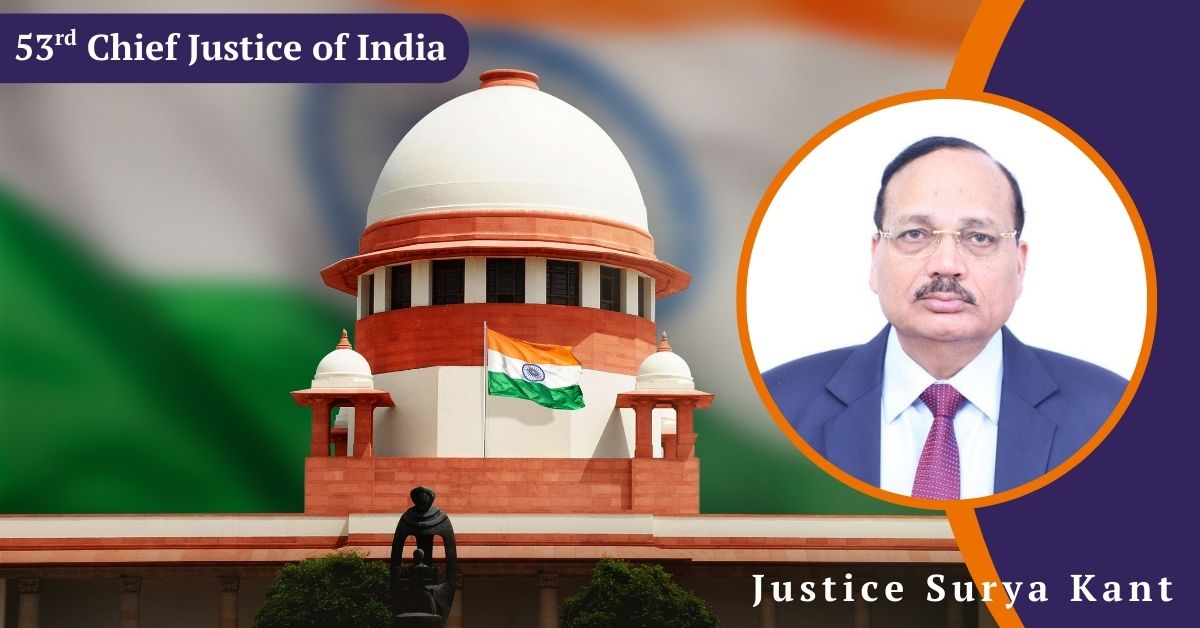
On 24 November 2025, India witnessed a landmark moment as Justice Surya Kant was sworn in as the 53rd Chief Justice of India. The ceremony, held in New Delhi, was historic for another significant reason: for the first time, Chief Justices and judges from countries including Malaysia, Mauritius, Sri Lanka, Nepal, Bhutan, and others were present at the oath-taking ceremony. Their presence highlighted not only the importance of the moment but also the growing international relevance and recognition of India’s judiciary in the global legal community.
Justice Surya Kant will serve a tenure of one year and three months, during which he has already outlined a forward-looking, reform-driven agenda—one that prioritizes accessibility, transparency, and swift delivery of justice to citizens.
A Journey of Perseverance and Excellence
Justice Surya Kant’s journey to the highest judicial office in the country is an inspiring account of dedication and hard work. Coming from a humble background, he rose through the legal profession with perseverance and commitment. His early accomplishments were notable—he became the youngest Advocate General for the State of Haryana, where he earned a reputation for clarity in legal reasoning, professional integrity, and grounded leadership. He was appointed as the judge of the High Court at the age of 42 which is fairly young for a lawyer to be appointed as a judge.
Over time, Justice Surya Kant gained respect nationally and internationally. His presence at the Commonwealth Law Conference in Malta in 2025 reflected his global engagement and the esteem he enjoys within international legal circles. The participation of several foreign judges in his oath ceremony further underlined that his elevation is seen as significant beyond India’s borders.
A Clear Vision for Accessible and Timely Justice
Shortly after assuming office, Justice Surya Kant articulated his priorities with clarity. As head of the judiciary of the world’s largest democracy, he has committed himself to making justice more accessible, efficient, and affordable. At a time when courts across India face significant pendency of cases, he has emphasized that meaningful judicial reform is essential.
His agenda reportedly includes expanding court infrastructure, improving administrative efficiency, deploying technology more effectively, and strengthening judicial manpower. The overarching vision is simple yet powerful: bringing justice closer to the people and eliminating obstacles—whether procedural, economic, or geographic—that prevent timely justice.
Championing Civil Liberties and Constitutional Freedoms
Justice Surya Kant has been associated with several significant judgments, including the landmark directive calling upon the Union Government to reconsider the colonial-era sedition law. The Supreme Court’s decision not to permit the filing of new criminal cases under the law until legislative review was widely considered a major stride in protecting free speech and preventing misuse of penal provisions. The ruling underscored the judiciary’s crucial role in safeguarding constitutional freedoms and ensuring that outdated laws do not stifle democratic expression.
Strengthening Legal Aid and Access for the Marginalized
One of Justice Surya Kant’s most impactful administrative contributions was during his tenure as Executive Chairman of the National Legal Services Authority (NALSA). Under his leadership, NALSA expanded its operations into some of the remotest and most underserved regions of India, ensuring that free legal assistance reached individuals who might otherwise have remained invisible within the justice system.
This achievement reflected his deep commitment to making the legal system inclusive—one that ensures equality before the law not only in theory but also in practical reality.
Advocating Alternative Dispute Resolution
A strong advocate of alternative dispute resolution (ADR), Justice Surya Kant has consistently emphasized the need to promote mediation and non-adversarial mechanisms for dispute settlement. Recognizing the strain on traditional courts, he has advocated that mediation and other ADR avenues can provide faster, cost-effective, and mutually satisfactory outcomes while maintaining relationships and reducing litigation burdens.
His vision aligns with global best practices and marks a modern approach to transforming the role of the judiciary in Mediation.
A Promising Road Ahead
As Justice Surya Kant begins his tenure, expectations across the legal fraternity remain high. His combination of humane leadership, judicial vision, administrative strength, and deep understanding of systemic challenges offers a strong foundation for meaningful reform. With a focus on reducing pendency, improving access, strengthening rights, and promoting modern methods of dispute resolution, his term may well be remembered as a forward-looking and transformational phase in the evolution of the Indian judiciary.
India awaits a judiciary that is faster, more responsive, and more inclusive—and Justice Surya Kant’s stewardship marks a promising beginning toward that future.
Author: Siddharth Sijoria Advocate,BA LLB, LLM,Comparative Law, CEU,Vienna
IP Co Chair, Young Commonwealth Lawyers Association,