

CLA News / Opening Remarks: Strengthening Justice Through Mediation by CLA President Steven Thiru

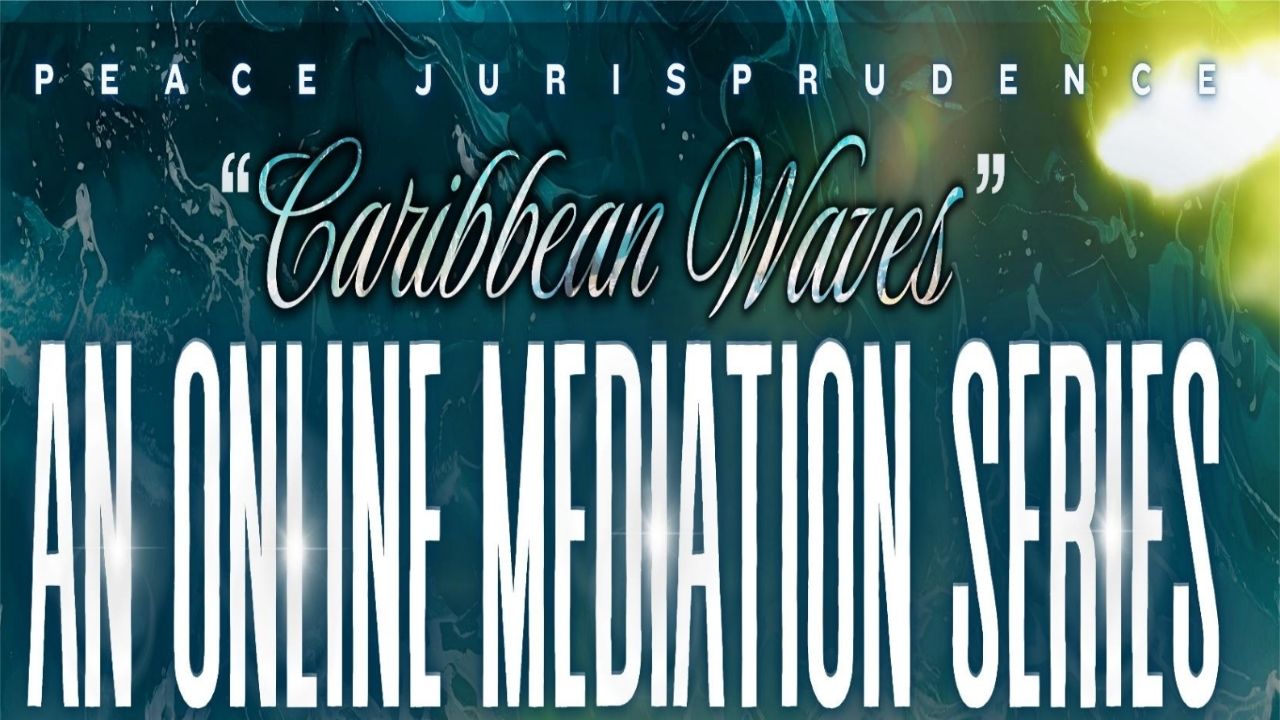
Steven Thiru delivered these opening remarks on 26 June 2026 during the ‘Caribbean Waves’ Online Mediation Series.
The Honourable Sir Ian Winder, Chief Justice of the Commonwealth of The Bahamas,
The Honourable Mr Justice Vasheist Kokaram, Judge of the Court of Appeal of The Bahamas,
The Honourable Mr Justice Adrian Saunders, retired President of the Caribbean Court of Justice,
Santhanakrishnan, President of Nivaaran — Mediators of Supreme Court of India; Co-Convenor, Commonwealth Lawyers Association (‘CLA’) Alternative Dispute Resolution (‘ADR’) Committee; and CLA Honorary Life President,
Distinguished guests, colleagues, members of the mediation community, ladies and gentlemen,
Good afternoon.
It is a privilege to join you for the launch of the ‘Caribbean Waves’ Online Mediation Series. I extend my sincere appreciation to the organisers for their invitation, and for their leadership in creating a platform that will foster dialogue, learning, and collaboration across the Caribbean and the wider Commonwealth mediation community. I also wish to thank the Honourable Mr Justice Vasheist Kokaram, Judge of the Court of Appeal of The Bahamas, whose vision and dedication have brought this initiative to fruition.
There could scarcely be a more fitting date to launch this initiative than 26 June. On this day in 1945, the Charter of the United Nations was signed in San Francisco. It was a moment born out of the devastation of conflict, yet inspired by the hope that disputes could be resolved through law, dialogue, and cooperation rather than force.
In light of the geopolitical tensions that continue to affect our world today, it is worth reminding ourselves of the wisdom embodied in Article 33(1) of the United Nations Charter, which provides:
The parties to any dispute, the continuance of which is likely to endanger the maintenance of international peace and security, shall, first of all, seek a solution by negotiation, enquiry, mediation, conciliation, arbitration, judicial settlement, resort to regional agencies or arrangements, or other peaceful means of their own choice. [emphasis added]
This provision is remarkable for its clarity and foresight. At the highest level of international relations, where disputes between States may threaten peace and security, mediation is expressly recognised as one of the preferred mechanisms for resolving conflict. Over eight decades ago, the international community acknowledged, through the United Nations Charter, that dialogue and mediation are instruments of wisdom, restraint, and lasting peace.
If mediation is accepted as a valuable tool for resolving disputes between nations, it is surely equally valuable in resolving the disputes that arise within our societies, communities, businesses, and families. The principles that sustain peace among States are not fundamentally different from those that sustain harmony among us.
These ideals resonate strongly within the Commonwealth. The Commonwealth Charter occupies a special place in the CLA’s work. It embodies the values and principles that unite our diverse family of nations, including democracy, human rights, good governance, and the rule of law. In particular, Article 7 of the Commonwealth Charter affirms our shared commitment to the rule of law and underscores the importance of an independent, effective, and competent legal system in dispensing justice and maintaining public confidence.
Mediation serves these objectives in a profound and practical way. It is a cornerstone of accessible justice. By providing an affordable, voluntary, and non-adversarial pathway to dispute resolution, mediation helps ensure that justice is not merely a formal entitlement available in theory, but a practical reality accessible to all. It promotes dignity, preserves relationships, reduces barriers to justice, and reinforces public confidence in the broader legal system. In doing so, mediation complements and strengthens the rule of law itself.
The CLA has long recognised the importance of alternative dispute resolution, and remains committed to advancing its development throughout the Commonwealth. Through the work of the CLA ADR Committee, we continue to promote awareness, capacity-building, policy development, and the sharing of best practices in arbitration, mediation, and other forms of dispute resolution. The Committee also encourages Commonwealth jurisdictions to adopt international mediation frameworks, and facilitates cross-border collaboration among practitioners.
This commitment is reflected in an ambitious programme of activities for 2026. The CLA ADR Committee has organised a series of lectures, training courses, conferences, and collaborative programmes aimed at strengthening mediation practice, advancing access to justice, and fostering professional engagement throughout the Commonwealth. These initiatives include guest lectures by experts, specialised mediation training programmes, and efforts to expand mediation education into new regions.
Among the highlights of this year’s programme is the Commonwealth Peace Mediation Conference 2026, to be held in Jaipur, India, from 31 July to 2 August 2026. The Conference will bring together mediators, lawyers, judges, academics, policymakers, and ADR practitioners from across the Commonwealth to exchange ideas, strengthen professional networks, and explore the evolving role of mediation in promoting peace and justice.
The ‘Caribbean Waves’ initiative sits comfortably within this broader vision. It exemplifies the spirit of collaboration that lies at the heart of the Commonwealth. It creates opportunities for practitioners to learn from one another, to share experiences across jurisdictions, and to build stronger networks dedicated to peaceful dispute resolution. Most importantly, it has the potential to generate exactly what its title suggests: waves of influence that extend far beyond today’s event and inspire further innovation and engagement throughout the region.
The CLA remains committed to working with stakeholders, institutions, and mediation organisations across the Commonwealth to advance these objectives. We are proud to support and collaborate on major mediation education initiatives, most notably the International Virtual Mediation Summer School, hosted by Nivaaran — Mediators of Supreme Court of India — and the Singapore International Mediation Centre. These partnerships reflect our belief that building mediation capacity and cultivating a culture of dialogue are essential investments in the future of justice.
As we celebrate the launch of the ‘Caribbean Waves’ initiative today, let us remember that every successful mediation means more than the resolution of a dispute. It represents the preservation of relationships, the restoration of understanding, and the triumph of dialogue over division.
In closing, there is perhaps no better way to capture the value of mediation than with this observation by Joseph Grynbaum: “An ounce of mediation is worth a pound of arbitration and a ton of litigation!”
May the ‘Caribbean Waves’ Online Mediation Series generate many more such ounces in the months and years ahead.
Thank you, and I wish this initiative every success.
Steven Thiru
President
Commonwealth Lawyers Association
26 June 2026
Steven Thiru records his appreciation to Jaishanker Sadananda for his assistance in preparing this speech.