

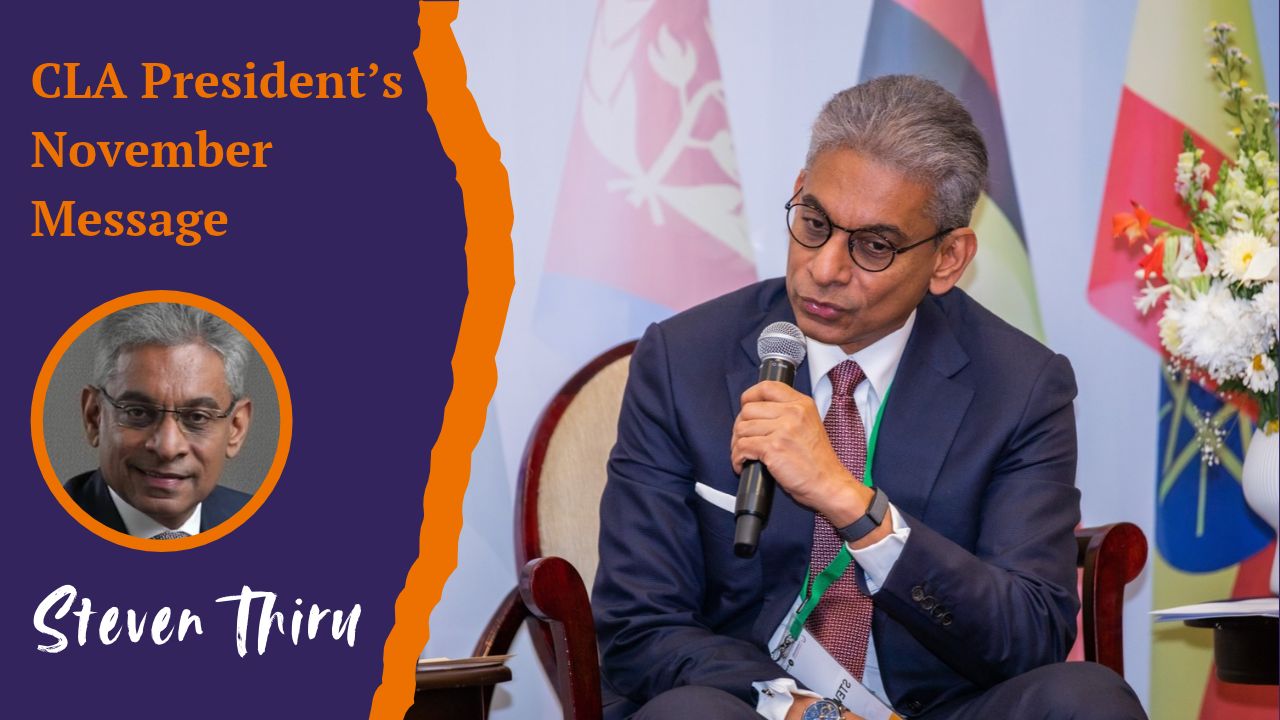
CLA News / President’s Message (November 2026) – Beyond Words: The Rule of Law Must Be Lived, Not Merely Proclaimed by CLA President Steven Thiru

So let me encourage each and all of you to do what you can to uphold the rule of law. Don’t take the rule of law for granted. Speak up for it. Educate kids and adults about the importance of the rule of law. Support an independent bar. Speak up for the courts and the other institutions whose independence must be maintained for the rule of law to survive. Work for legal solutions to the problems our communities, our country and the world faces. In everything you do, seek to keep the law strong, vigorous and respected. If we do these things the rule of law will survive and the world will be a better place.
— The Rule of Law in a World of Flux (25 June 2019), Beverley McLachlin, P.C., C.C., former Chief Justice of Canada (2000–2017)
The Imperative of Action
The rule of law is not self-executing. It thrives only when we actively speak up for it and match our words with appropriate measures. For the legal profession, it is incumbent upon all of us to defend the rule of law when it is threatened or breached, through principled and resolute dissent along with proactive measures to address the violation. This is the essence of a ‘rule of law in action’ approach.
This imperative of translating principles into practice directly informed our engagement at the 28th Commonwealth Heads of Government Meeting (‘CHOGM 2026’) in Antigua and Barbuda earlier this month, and our collaborative efforts at the Commonwealth Lawyers Association (‘CLA’)’s Africa Legal Forum 2026 in Kigali, alongside the Rwanda Bar Association and the International Academy of Family Lawyers (‘IAFL’) just prior to that.
The Commonwealth at a Crossroads: Turning Commitments into Action
The modern CHOGM represents a deliberate departure from the Commonwealth Prime Ministers’ Conferences that took place between 1944 and 1969. As rapid post-war decolonisation transformed the geopolitical landscape, sovereign member nations demanded a decentralised, egalitarian assembly where all members met as equal partners. In response to this shifting dynamic, the inaugural modern CHOGM was convened in Singapore in 1971.
CHOGM is the Commonwealth’s highest-level deliberative and policy-making forum, where heads of government meet as representatives of independent and sovereign member states to deliberate on matters of common concern and reach decisions by consensus. Its primary purpose is to formulate responses to shared global challenges, foster equitable socio-economic development, defend democratic governance, and advance collective approaches to issues affecting member countries.
At that inaugural 1971 summit, leaders adopted the landmark Singapore Declaration of Commonwealth Principles, which articulated the association’s shared commitments to individual liberty, equality of rights, international peace, and opposition to racial discrimination as the bedrock values of the association. The Declaration established an important normative foundation for the Commonwealth to operate as an active mechanism for collective international action guided by shared principles.
Over the ensuing decades, CHOGM has driven critical constitutional and political breakthroughs. It spearheaded the global campaign against apartheid, adopting the Gleneagles Agreement on Sporting Contacts with South Africa, 1977 to formally isolate South Africa’s regime through sporting boycotts, followed by the Nassau Declaration on World Order in 1985. In 1991, the landmark Harare Declaration elevated human rights, democracy, the rule of law, and judicial independence as fundamental values underpinning Commonwealth membership. To give practical effect to these standards, leaders at the 1995 Auckland summit adopted the Millbrook Commonwealth Action Programme on the Harare Declaration, which established the Commonwealth Ministerial Action Group (‘CMAG’).
The creation of CMAG provided an explicit institutional mechanism to address serious or persistent violations of Commonwealth values. This commitment to democratic accountability was further reinforced by the endorsement of the Commonwealth (Latimer House) Principles on the Three Branches of Government in 2003 and the adoption of the Commonwealth Charter in 2012. Together, these instruments affirm the Commonwealth’s commitment to democratic governance, human rights, the separation of powers, judicial independence, and the rule of law.
CHOGM 2026: The Commonwealth’s Continuing Commitment to the Rule of Law
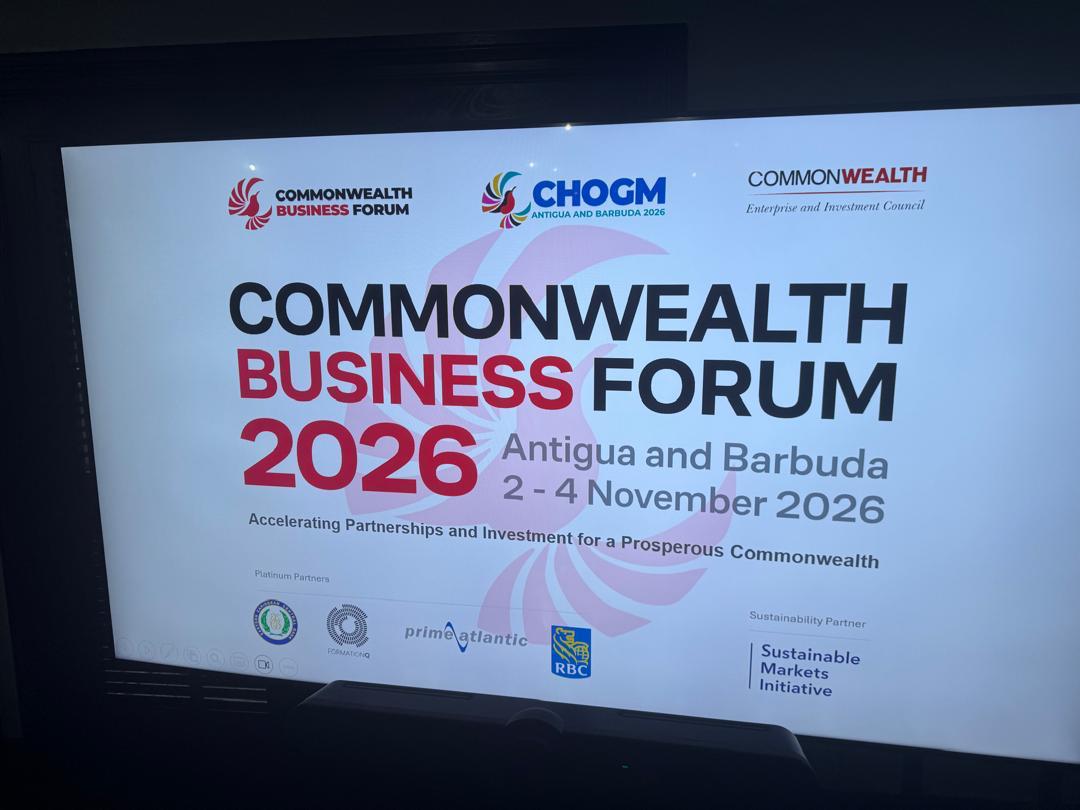
This rich history of normative evolution provided the backdrop for CHOGM 2026, held from 1 to 4 November 2026 in St. John’s, Antigua and Barbuda — the smallest sovereign nation by population ever to host the summit. Held under the central theme ‘Accelerating Partnerships and Investment for a Prosperous Commonwealth’, the biennial meeting brought over 4,000 delegates and approximately 30 heads of government to deliberate on pressing global priorities, including climate resilience, trade expansion, and sustainable infrastructure development.
Significantly, the CLA was invited to participate actively, underscoring the legal profession’s indispensable role in upholding the rule of law and driving international development and commercial stability. Representing the CLA on the ground in Antigua and Barbuda, I was accompanied by our President-Elect, Sophie Stanbrook, and Lenny Rahman, a CLA Council member representing Brunei Darussalam.
At the Commonwealth Business Forum 2026, I spoke at the Energy Security and Strategic Infrastructure roundtable discussion. In my address entitled ‘A Shared Legal Heritage, a Stronger Rule of Law: Foundations for a Resilient Energy Future’, I advanced the proposition that multi-decade, multi-billion-dollar investments in energy transition infrastructure cannot succeed without a predictable, efficient legal framework. I emphasised that an autonomous judiciary and a self-governing Bar, insulated from political or executive pressure consistent with the Latimer House Principles, are essential institutional safeguards for contract enforcement, the protection of property rights, and investor confidence.
At the Commonwealth Women’s Forum, Sophie Stanbrook moderated a panel discussion on accountability for gender-based violence in an increasingly digital world, which explored practical responses such as the inclusion of women with disabilities from the outset, sharing expertise in digital investigations, and the preservation and reporting of online abuse. She also participated in a roundtable session at the Commonwealth Business Forum on investing in climate-vulnerable markets, where the exchange of experiences, knowledge, and best practices among small states emerged as an important area for cooperation.
Lenny Rahman attended a panel discussion at the Commonwealth People’s Forum on the International Court of Justice’s landmark 2025 advisory opinion on climate change, one year on. The discussion examined its implications for human rights, state obligations, and accountability for climate-related harm.
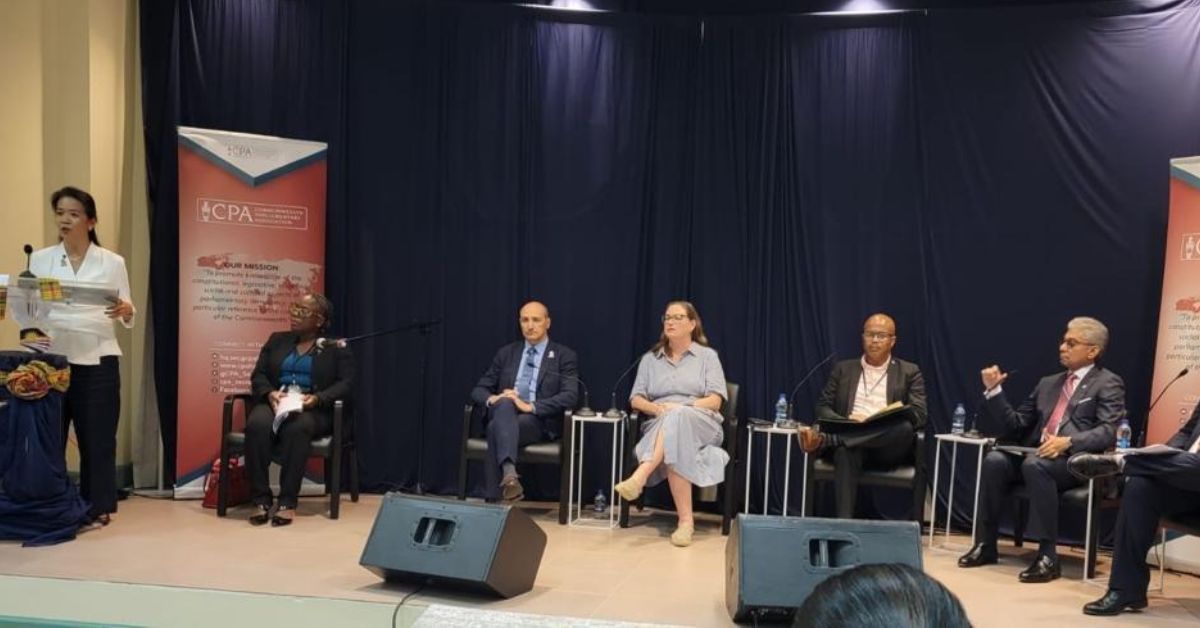
I represented the CLA on the ‘Safeguarding Democracy: Implementing the Nadi Declaration’ panel of a high-level event co-hosted by the Commonwealth Parliamentary Association and the Parliament of Antigua and Barbuda on the sidelines of CHOGM 2026. The session focused on turning the commitments of the February 2026 Nadi Declaration on Democratic Resilience and Participation into practical and measurable cooperation.
In my remarks, I cautioned against the gradual and insidious erosion of democratic institutions and the phenomenon of democratic backsliding, which can occur incrementally and without sufficient scrutiny. I called for strong checks and balances and firm adherence to the separation of powers. Crucially, I highlighted the need for tangible measures to give effect to these principles, and the important role of independent and active bar associations and law societies in this regard.
These professional bodies must serve as robust guardians of democratic resilience, discharging their responsibility to actively defend judicial independence and uphold the independence of the legal profession, and resisting executive overreach.
The true measure of democratic resilience lies not in the eloquence of our declarations, but in the extent to which their commitments are translated into practice. While the Nadi Declaration and its predecessors provide indispensable normative benchmarks, such instruments alone cannot arrest institutional decay. If we are to achieve meaningful compliance with the rule of law, we must move beyond a culture of expository statements and pious platitudes that fall short on practical implementation. Even the most ambitious declarations risk becoming hollow formalities unless accompanied by purposeful realisation coupled with accountability.
What is urgently required is the institutionalisation of a more structured and effective process of review. This must not be a superficial, tick-the-box exercise, but a substantive assessment of progress. Such an audit should facilitate a clear-eyed and objective accounting of which commitments were successfully fulfilled, and transparent discussions regarding institutional shortcomings and the underlying causes.
We must move beyond the diplomatic safety of polite consensus to confront the specific political and systemic obstacles to implementation. Only by subjecting pledges to this level of evidence-based scrutiny can we hope to translate high-level aspirations into concrete protections for the people of the Commonwealth.
Africa Legal Forum 2026: Strengthening the Legal Profession Through Regional Engagement
The CLA’s Africa Legal Forum 2026 was convened from 28 to 30 October 2026 at the Serena Hotel in Kigali, Rwanda. This regional conference drew delegates from across Africa and the wider Commonwealth, providing a valuable forum where bar leaders, practitioners, and academics converged to deliberate on the theme ‘Recent Developments in Corporate, Commercial and Family Law’.
One of the most rewarding and encouraging aspects of the Forum was the exceptional engagement of the next generation of legal professionals. The conference commenced with a dedicated NextGen Lawyers Forum specifically designed to provide a platform for early-career advocates under the age of 40. It was particularly heartening to witness the vibrant, pioneering spirit and thoughtful contributions of these young members of the profession as they considered the evolving landscape of legal practice. The participation of several law students from local Rwandan universities was equally welcome.
In my opening remarks, entitled ‘Standing Together Across Africa and the Commonwealth: Turning Solidarity into Rule of Law in Action’, I emphasised that defending the rule of law requires far more than passive consensus or the periodic issuance of public statements.
Defending the Rule of Law Through Sustained Action
Ultimately, both our engagement at CHOGM 2026 and our deliberations at the Africa Legal Forum lead us back to a singular and overriding truth — the rule of law cannot survive as a passive doctrine. It flourishes only when it is vigorously defended on the ground through the daily efforts of a self-governing and courageous Bar and an independent judiciary. High-level political declarations, business forums on infrastructure investment, and international roundtable discussions are vital for articulating shared ideals, but they remain unfinished architecture until we breathe life into them through meaningful action, supported by accountability and effective implementation.
As we look to the future, let us remember the words of former Chief Justice Beverley McLachlin and refuse to take the rule of law for granted. Whether through advocating a systematic review of commitments to the rule of law or supporting legal aid and human rights defence initiatives across our jurisdictions, our mandate remains clear. We must continuously translate expressions of solidarity into concrete and measurable protection for our institutions and our communities. It is through sustained action, long on deeds and uncompromising in principle, that a ‘rule of law in action’ approach will truly thrive.
Steven Thiru
President
Commonwealth Lawyers Association
23 November 2026
Steven Thiru records his appreciation to Jaishanker Sadananda and Chin Oy Sim for their assistance in preparing this article.