

CLA News / Chagossians, the Chagos Islands, and the right to self-determination

By Philip Rule KC, David Denniston and Lloyd M. DeVincenzi
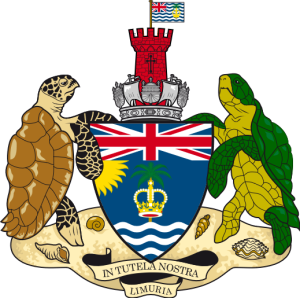
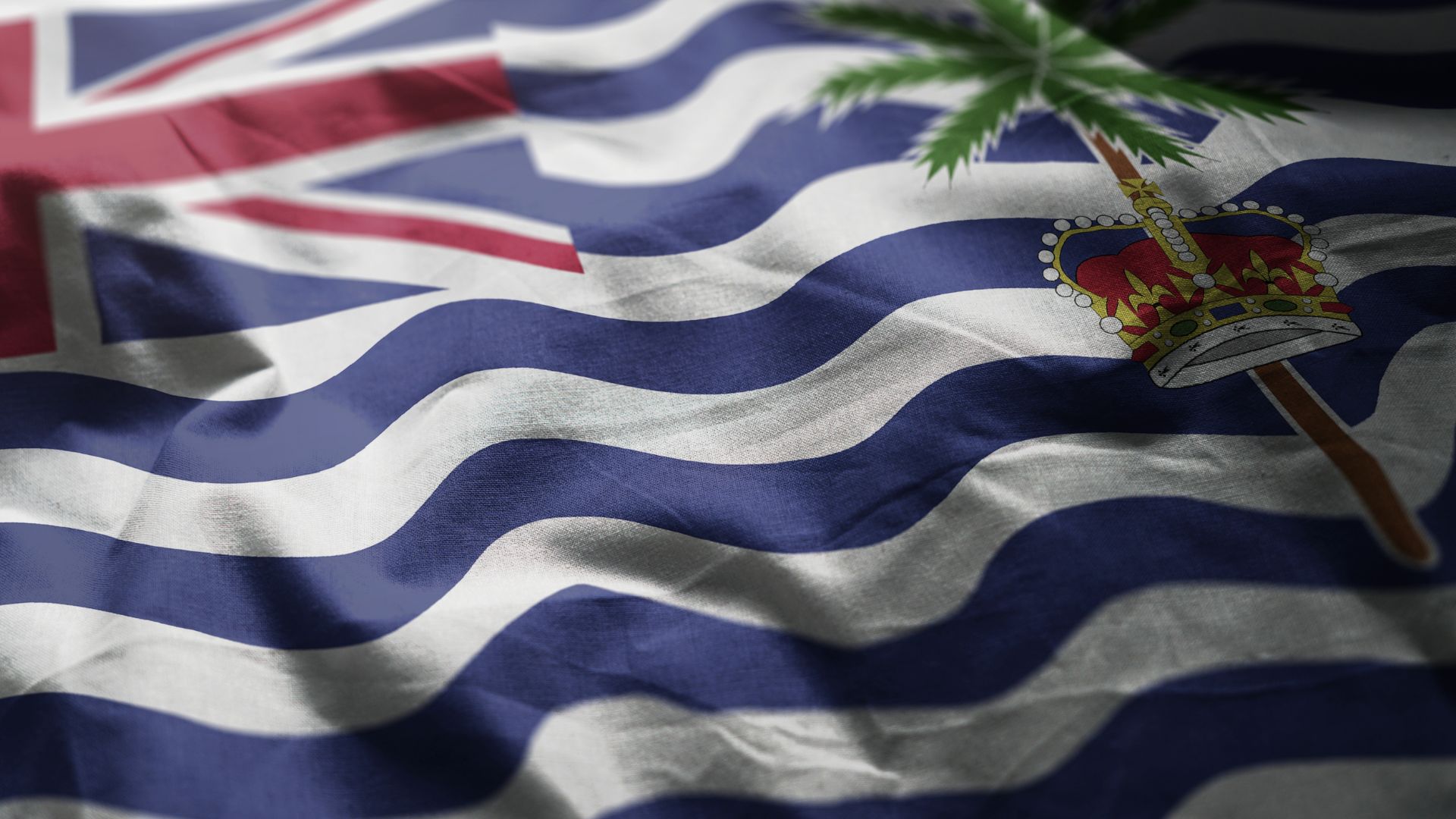
The story of injustice for the inhabitants of the Chagossian Islands, presently constituted as the British Indian Ocean Territory (BIOT), is not one of history alone but it represents a pressing issue of the present day, and is before the courts once again.
A sharp focus is provided by the current presence, since February 2026, of a small number of Chagossians who have re-entered the islands and are seeking before the domestic courts of the BIOT and UK to assert and protect their right of abode in Chagos, and to be afforded self-determination.
The location of the islands in the Indian Ocean has been the cause of a political and international geopolitical interest stretching back to the 1960s and 1970s, when the Chagossians were unlawfully forcibly removed by the United Kingdom as the colonial power. But has anything changed, and are the islanders being treated lawfully now?
This article questions whether current UK proposals for what shall be done with the Chagos Islands are consistent with international legal obligations, and the rights of the people of the Chagos archipelago.
Where are the islands?
Whilst the islands themselves span hundreds of miles apart, in general terms it can be said that the islands are an archipelago of coral islands in the central Indian Ocean, located over 1300 miles (2000km) from Mauritius, over 1000 miles (1900km) from the Seychelles, and over 800 miles (1200km) from the Maldives. BIOT is eligible to hold a CLA Council Seat.
Who are the Chagossians and what has happened to them?
The first relevant fact to be observed is that the Chagossian people exist. This is a matter of legal certainty, determined by the courts. It is an incontrovertible truth. Consistent with previous cases decided in England, the Chief Justice of the BIOT in a judgment on 31 March 2026 records that:
“By the 1960s it is clear there was a settled population living in the Chagos Islands, albeit small. This fact was expressly conceded by the Commissioner before me at the hearing. This is important as we shall see the Foreign and Commonwealth Office (now the Foreign, Commonwealth and Development Office) for inglorious reasons, has for many years sought to perpetuate the fiction that there was no settled or permanent population on the islands at the time.
There was a forced exile of the entire population between 1966 and 1972 from their homeland on the Islands…
…
Internal government documents reveal concern about how the presence of island inhabitants would affect the legal status of the Territory. Officials sought to avoid recognising the population as permanent residents because this could create obligations under the United Nations Charter, in particular General Assembly Resolution 1514 (XV) of 14 December 1960, “Declaration on the Granting of Independence to Colonial Countries and Peoples”.
To avoid these problems a fiction was put forward that there was no settled population…
To give just one other example, as long ago as 2004, the Court of Appeal of England & Wales expressly acknowledged:
“the shameful treatment to which the islanders were apparently subjected. The deliberate misrepresentation of the Îlois’ history and status, designed to deflect any investigation by the United Nations; the use of legal powers designed for the governance of the islands for the illicit purpose of depopulating them; the uprooting of scores of families from the only way of life and means of subsistence that they knew; the want of anything like adequate provision for their resettlement: all of this and more is now part of the historical record. It is difficult to ignore the parallel with the Highland clearances of the second quarter of the nineteenth century. Defence may have replaced agricultural improvement as the reason, but the pauperisation and expulsion of the weak in the interests of the powerful still gives little to be proud of.”
The first instance court, in a very detailed examination of the evidence noted also this history of the removal and relocation of the Chagossians: “some who had lived there for generations were uprooted from the only way of life which they knew and were taken to Mauritius and the Seychelles where little or no provision for their reception, accommodation, future employment and well-being had been made. Ill-suited to their surroundings, poverty and misery became their common lot for years. The Chagossians alone were made to pay a personal price for the defence establishment on Diego Garcia, which was regarded by the UK and US Governments as necessary for the defence of the West and its values. Many were given nothing for years but a callous separation from their homes, belongings and way of life and a terrible journey to privation and hardship.”
As was recorded by Lord Justice Laws in the year 2000: “on at least some of the islands there lived in the 1960s a people called the Îlois. They were an indigenous people” (Bancoult No.1 [2001] QB 1067, DC).
Formal recording by the colonial administrators commenced in 1878, registering the births, marriages and deaths that took place in the Chagos Archipelago between 1878 and 1971. Earlier still, East India Company maps of the Chagos archipelago show the presence of the settlements in 1837. Those include places where the churches stood, and the graveyards, and where the homes of the Chagossians were before the unlawful deportations of some fifty years ago.
In recognition of the cultural history – including the presence of former homes, churches, and graveyards of their ancestors – the UK provided what it terms heritage visits for the Chagossians in 2006, 2008, 2009, 2010, 2011, 2013, 2015, 2017, 2018 and 2019, but these were stopped in 2020 – six years ago – and have never recommenced despite several statements by the UK government that they would do so; nor is there any timetable to do so. The Chagossians in reality have for many years been treated worse than the tourist yachts that were routinely given permits to visit the outer islands. Many Chagossians are elderly and infirm and will soon be unable to visit the graves and islands of their forebearers, but all applications for permits to visit are presently denied.
The Chagossian people have thus been in exile since being forcibly removed from the Chagos Islands by the British authorities in the period to 1973. In the past, this action, though unlawfully undertaken, had been asserted to be justified on the grounds of national security due to the military base at Diego Garcia. However, the UK’s position has evidently now changed with a proposed Treaty signed that would allow persons to settle on the outer islands.
The present situation
As noted above, the Chagos Islands are presently constituted as the British Indian Ocean Territory. Whilst the BIOT has its own government, as it is a British Overseas Territory constitutionally His Majesty the King of the United Kingdom of Great Britain and Northern Ireland and of His other Realms and Territories (acting by his Privy Councillors) reserves and retains the power to make such provision as he considers expedient for or in connection with the Territory.
The UK has agreed a Treaty with Mauritius to transfer sovereignty over the Chagos Islands to the latter. This agreement, signed in 2025 but not yet implemented, would bring to an end the existence of the BIOT, in which the Chagossian people were (and are in the form of the present re-occupation) the sole inhabitants and citizens. The population of Chagossians was settled and indigenous prior to the coming into existence of this colonial Territory (the BIOT was created by Order in Council in November 1965).
There has been no democratic process in which the consent of the Chagossian people (the diaspora as it has been compelled unlawfully to become) has been sought for this fundamental matter concerning their homeland. In fact, it appears that the majority of Chagossians have chosen British citizenship over Mauritian citizenship since first given the opportunity to obtain full British citizenship on 21 May 2002 followed by a further and broader citizenship route for descendants introduced in 2022.
As noted, since February 2026 a small number of Chagossians have re-entered the islands and remain in occupation. Many more wish to join them, and await the outcome of legal proceedings to determine the position. Elderly survivors still wish to return, as do many descendants of this people, who remain a tight-knit community. The population are seeking before the BIOT courts to assert and protect their right of abode, and to be afforded self-determination.
The very day after the Chagossian contingent (those on the islands at present) had arrived, and without even speaking to them, the BIOT’s chief immigration officer issued formal notices for their removal. Each notice is in terms that “… Hereby Order that you [named Chagossian] being a person unlawfully present in the Territory shall be removed from the Territory and shall remain out of the Territory until further notice”. It demanded the person leave immediately, and continues that:
If you breach this order and return to the Territory you will commit a criminal offence and be liable on conviction to imprisonment for 3 years or to a fine of £3,000, or to both such imprisonment and such fine.
The Chagossians on the islands were able to pursue a judicial review claim before the Supreme Court of the British Indian Ocean Territory. The four Chagossian claimants include the First Minister of the Chagossian Government-in-Exile, elected by a vote of over 1000 Chagossians.
The claimants challenged the BIOT Commissioner’s failure to decide to issue them with a permit to be present in the islands, and the removal orders issued. They also challenged the constitutionality of a provision of an Order in Council which purports to remove rights of abode in the islands from the Chagossian people.
Before the Chief Justice of the BIOT Supreme Court they have successfully defended their position. In March 2026 the Court concluded that the provision of the Order in Council that removes the right of abode from Chagossians (section 9 of the British Indian Ocean Territory (Constitution) Order 2004) unlawfully interfered with their right of abode in the islands and has ordered it be quashed. That order is stayed whilst the BIOT government appeals against the ruling of the Chief Justice.
In the meantime, the misrepresentation has continued. Notwithstanding the established facts above concerning the Chagossian population’s existence, recorded in multiple judgments of the courts, in seeking to progress a Bill before Parliament the UK government in 2025 repeated the false claims of the past in a Parliamentary publication titled ‘Human Rights Memorandum’ (issued to accompany the Diego Garcia Military Base and British Indian Ocean Territory Bill). The UK government asserted (under the title of “The right to self-determination”) that: “9. The islands that make up BIOT have, and had, no settled population…”; and argues that “No question of self-determination for such a population arises now”. That is in many ways simply to repeat the lie originally perpetrated at the time of the forced removals, long since exposed for what it was.
British Overseas Territories and Self-determination
Aside from their right to reside and enter their homeland, a vital question for Chagossians is whether they shall be afforded the same right to self-determination that other British Overseas Territories populations all enjoy, such as those in the Falklands Islands, Gibraltar, and the Pitcairn Islands for example.
In 2012 the UK government published its policy concerning the British Overseas Territories. It included this statement of the UK’s approach: “The UK is committed to defend the Territories and protect their peoples from external threats, ensuring their right of self-determination” (p8); “The 1999 White Paper Partnership for Progress and Prosperity set out a new relationship between the UK and its Overseas Territories based on the principles of self-determination…” (p11). In relation to the Falklands Islands, it also noted “The principle of self-determination, enshrined in the UN Charter, underlies our position” (p100).
The question that this raises is what the UK is doing in relation to self-determination of the unlawfully exiled Chagossians of the BIOT (or indeed, those now present there on the Chagos island of Peros Banhos). It also asks, why is the UK taking a position with respect to BIOT that it does not take with respect to the Falkland Islands, for example.
Statements of International bodies responsible for monitoring compliance with relevant Conventions concerning the treatment of the Chagossians
Importantly, the Chagossian people (also known as the Îlois) have had their predicament recognised by the Committee on the Elimination of Racial Discrimination (‘CERD’). In its October 2016 Concluding Observations on the UK, reporting upon the UK’s compliance with its international obligations under the Convention for the Elimination of Racial Discrimination, the CERD[1] said:
Forcible eviction of Chagossians from Diego Garcia
- The Committee regrets that no progress has been made in implementing theCommittee’s previous recommendation to withdraw all discriminatory restrictions on Chagossians (Îlois) from entering Diego Garcia or other islands in the Chagos Archipelago (see CERD/C/GBR/CO/18-20, para. 12), that the State party continues to maintain its position that the Convention does not apply to the British Indian Ocean Territory on the grounds that it has no permanent population and that the State party has not yet extended the application of the Convention to the Territory (arts. 2, 5 and 6).
- Taking note of the decision, adopted on 18 March 2015, of the arbitral tribunal constituted under annex VII of the United Nations Convention on the Law of the Sea in the matter of the Chagos Marine Protected Area Arbitration, the Committee reiterates its previous recommendation (see CERD/C/GBR/CO/18-20, para. 12) that the State party has an obligation to ensure that the Convention is applicable in all territories under its control, including the British Indian Ocean Territory, and urges the State party to hold full and meaningful consultations with the Chagossians (Îlois) to facilitate their return to their islands and to provide them with an effective remedy, including compensation.
In its subsequent report into the UK, published in August 2024[2] the CERD also said:
Forcible eviction of Chagossians from Diego Garcia
- …the Committee is concerned about the lack of progress made in withdrawing all discriminatory restrictions on entry to Diego Garcia and other islands in the Chagos Archipelago by Chagossians (Îlois), as previously recommended by the Committee (arts. 2, 5 and 6).
- Recalling its previous concluding observations, the Committee reiterates that the State party has an obligation to ensure that the Convention is applicable in all territories under its control, including the British Indian Ocean Territory, and urges the State party to hold full and meaningful consultations with the Chagossians (Îlois) to facilitate their return to their islands and to provide them with an effective remedy…
The CERD, in its June 2025 report into Mauritius[3], also addressed the “Situation of the Chagossians” and within that consideration said (at [26]) “it remains concerned about the ongoing effects of forced displacement, including poverty and discrimination, and the lack of information on the impact of support measures for those living on the mainland. The Committee is further concerned about the extent to which the Chagossians have been meaningfully consulted in ongoing negotiations and processes related to their right to full reparations (arts. 2, 5 and 6).” Amongst its recommendations the Committee recommended that Mauritius “(b) Ensure the full and meaningful participation of the Chagossians in all processes relating to the ongoing negotiations concerning the Chagos Archipelago, in fulfilment of their right to self-determination” and “(c) Take concrete steps, in consultation with and with the consent of Chagossian representatives, to develop and implement a comprehensive reparations framework that addresses restitution, rehabilitation, satisfaction, including the restoration of dignity, resettlement, redress and guarantees of non-repetition” [27].
In February 2023[4] a UN group of experts (including the Special Rapporteurs on minority issues, and that of cultural rights, and on racial discrimination, and on indigenous peoples) addressed letters to the governments of both the UK and Mauritius to express concern about the continuous forced displacement of the Chagossian people and lack of their effective participation in decision-making concerning negotiations over the Chagos Archipelago.
In December 2025 the UN Committee on the Elimination of Racial Discrimination published its decision under its early warning and urgent procedures about the treaty between the UK and Mauritius on the British Indian Ocean Territory[5]. The Committee expressed itself to be:
Deeply concerned that the bilateral agreement prevents Chagossian people from returning to their ancestral lands, including cultural and spiritual sites, and from exercising their cultural rights and preserving their cultural heritage;
Alarmed that the provisions of the bilateral agreement are inconsistent with the United Nations General Assembly resolution 73/295 particularly on the request to facilitate the resettlement of Chagossian people, in the Chagos Archipelago without imposing any “impediment or obstacle to such resettlement”;
Gravely concerned about the reported lack of consultation with the Chagossian people during the negotiations, drafting and conclusion of the bilateral agreement and about the lack of a mechanism to ensure their participation in the decision-making processes affecting their rights and lands, restricting the exercise of their right to self-determination.
As noted by leading public international law academic Elodie Tranchez:
“CERD’s Decision of December 2025 is exceptional for both its timing and its form. Acting under the Early Warning and Urgent Action Procedure[…], the Committee may issue statements, letters, or more rarely, decisions. Decisions are reserved for situations where CERD considers that discriminatory patterns risk becoming entrenched or irreversible if left unaddressed. Not legally binding, these decisions nevertheless constitute the Committee’s authoritative interpretation of State obligations under ICERD and carry significant normative and political weight.” [6]
The announcement of the United Nations Human Rights Council of 10th June 2025[7] stated:
“10 June 2025
GENEVA – The recently signed agreement between the United Kingdom and Mauritius fails to guarantee and protect the rights of the Chagossian people, including their right to return to Diego Garcia, effective remedy and reparations and their cultural rights, UN experts* said today.
…
“By maintaining a foreign military presence of the United Kingdom and the United States on Diego Garcia and preventing the Chagossian people from returning to Diego Garcia, the agreement appears to be at variance with the Chagossians’ right to return, which also hinders their ability to exercise their cultural rights in accessing their ancestral lands from which they were expelled,” the experts said.
…
Most notably, the current agreement contains no provisions providing for the full panoply of the right to adequate and effective reparations as it does not provide restitution, satisfaction, and guarantees of non-repetition, the experts noted. The agreement also lacks provisions to facilitate the Chagossian people’s access to cultural sites on Diego Garcia and protect and conserve their unique cultural heritage.
“In light of these significant concerns, we call for the ratification of the agreement to be suspended and for a new agreement to be negotiated that fully guarantees the rights of the Chagossian people to return to all islands of the Chagos Archipelago, including Diego Garcia. This includes their right to adequate and effective remedy and reparations, including restitution, satisfaction, and guarantees of non-repetition, as well as their cultural rights,” the experts said.
The experts had previously raised concerns about continuous forced displacement of the Chagossian people and lack of their effective participation in decision-making processes concerning negotiations over the Chagos Archipelago, in letters to the governments of Mauritius and the United Kingdom on 21 February 2023 as well as through a press release on 10 October 2024.
“We are gravely concerned about the lack of meaningful participation of Chagossians in processes that have led to the agreement,” the experts said.
They urged the Governments of the United Kingdom and Mauritius to apply a human rights-based approach in addressing historical injustices against the Chagossian people.
The experts are in touch with the United Kingdom and Mauritius regarding these issues.”
Whilst most Commonwealth countries have ratified these Conventions, and though self-determination is not uncommonly an issue within their borders, the Commonwealth (the Commonwealth of Nations) has itself has made no declarations with respect to the right to self-determination[8]. Perhaps that is because (as we shall see below) the principle is recgonised to be one of customary international law in any event, and so simply is an obligation erga omnes.
Relevant international law that the UK has signed up to abide by
The context to those important statements of international condemnation of the UK’s present treatment of the Chagossians is the system of fundamental international law that it represents, including basic rights protections enshrined in some of the most widely-adopted Conventions the world knows. In some respects also, it is a concern of principles of customary international law; of principles so fundamental as not to need a state to voluntarily recognise the point in order for it to take legal effect.
The UK maintains a dualist system so that only in certain circumstances are international law obligations enforceable through the domestic legal system. For the present consideration however, the question is whether the treatment of Chagossians visited upon them by the UK through its current treatment and through its proposed Treaty is in breach of international law. This is particularly important given that one asserted justification for the intended transfer of sovereignty by the present UK government is the assertion it is having regard to international law (and in particular to an advisory opinion of the International Court of Justice).
The reader may of course make their own assessment as to whether any of the following legal provisions are being adhered to in the treatment of the Chagossian people explained above.
Self-determination and the right to return to one’s country
Article 1 of the International Covenant on Civil and Political Rights 1966 (ratified by the UK in 1976), provides that “All peoples have the right of self-determination. By virtue of that right they freely determine their political status and freely pursue their economic, social and cultural development.”.
Under the ICCPR, each state party undertakes to “respect and ensure to all individuals within its territory and subject to its jurisdiction” all the ICCPR rights, without distinction of any kind (Art. 2(1)).
Also within the ICCPR, Article 12(4) provides for the right of return to one’s country. The Human Rights Committee General Comment[9] on article 12 of the ICCPR states that:
- The right of a person to enter his or her own country recognises the special relationship of a person to that country. It implies the right to remain in one’s own country. It includes not only the right to return after having left one’s own country; it may also entitle a person to come to the country for the first time if he or she was born outside the country. It also implies prohibition of enforced population transfers or mass expulsions to other countries. [para. 19]
- The scope of “own country” is broader than the concept “country of his nationality” and is not limited to nationality in a formal sense, and it embraces, at the very least, an individual who, because of his or her special ties to or claims in relation to a given country, cannot be considered to be a mere alien. This would be the case, for example, of nationals of a country who have been stripped of their nationality in violation of international law, and of individuals whose country of nationality has been incorporated in or transferred to another national entity, whose nationality is being denied them [20].
- A person may not be arbitrarily deprived of the right to enter his or her own country. The reference to the concept of arbitrariness in this context is intended to emphasize that it applies to all State action, legislative, administrative and judicial; it guarantees that even interference provided for by law should be in accordance with the provisions, aims and objectives of the Covenant and should be, in any event, reasonable in the particular circumstances. The Committee considers that there are few, if any, circumstances in which deprivation of the right to enter one’s own country could be reasonable. A State party must not, by stripping a person of nationality or by expelling an individual to a third country, arbitrarily prevent this person from returning to his or her own country [21].
Likewise, self-determination is the most basic of all collective human rights, a foundation upon which all other collective human rights depend. The United Nations system is built on the principle of self-determination of peoples and equal rights as expressed in Article 1 of the UN Charter (ratified in 1945). Article 73 requires that “Members of the United Nations which have or assume responsibilities for the administration of territories whose peoples have not yet attained a full measure of self-government recognize the principle that the interests of the inhabitants of these territories are paramount…” and to this end is “to ensure, with due respect for the culture of the peoples concerned, their political, economic, social, and educational advancement, their just treatment, and their protection against abuses”.
In the colonial context, self-determination is recognised as a legal right of all peoples[10], and has been characterised as an obligation erga omnes and “one of the essential principles of contemporary international law” [11].
Non-discrimination and the right to return to one’s country
The International Convention on the Elimination of Racial Discrimination (“ICERD”) was ratified by the UK in March 1969. Article 6 provides that:
“States Parties shall assure to everyone within their jurisdiction effective protection and remedies, through the competent national tribunals and other State institutions, against any acts of racial discrimination which violate his human rights and fundamental freedoms contrary to this Convention, as well as the right to seek from such tribunals just and adequate reparation or satisfaction for any damage suffered as a result of such discrimination”.
Under Article 5 ICERD, states parties “undertake to prohibit and to eliminate racial discrimination in all its forms and to guarantee the right of everyone, without distinction as to race, colour, or national or ethnic origin, to equality before the law, notably in the enjoyment of the following rights,” which include the: “right to leave any country, including one’s own, and to return to one’s country”.
The right to take part in one’s cultural life
Article 15(1)(a) of the International Covenant on Economic, Social and Cultural Rights 1966 (ICESCR) (ratified by the UK in 1976) protects the right of everyone to take part in cultural life. Article 15(2) sets out an obligation on States Parties to, inter alia, adopt measures for the conservation, development and dissemination of culture (further explained by General Comment No.25 of 30 April 2020, E/C.12/GC/25).
The Committee on Economic, Social and Cultural Rights (CESCR) General Comment No.21 of 21 December 2009 (E/C.12/GC/21) provides authoritative guidance on the principles of application and scope of Article 15(1)(a) and addresses how its observance requires from the State party both “abstention (non-interference with the exercise of cultural practices and with access to cultural goods and services) and positive action (ensuring preconditions for participation, facilitation, and promotion of cultural life, and access to and preservation of cultural goods)” (at [6]).
Indigenous or tribal people are among the persons and communities that require special protection.
In the interpretation of Article 15(1)(a) ICESCR “Cultural life” encompasses, inter alia, “customs and traditions through which individuals, groups of individuals and communities express their humanity and the meaning they give to their existence, and build their world view representing their encounter with the external forces affecting their lives” (GC No.21 at [13] and “Take part” encompasses elements including ‘access to’ (i.e. the right “to follow a way of life associated with the use of cultural goods and resources such as land, water, biodiversity, language or specific institutions, and to benefit from the cultural heritage and the creation of other individuals and communities”) (GC No.21 at [14]-[15]).
In its respect, protection and fulfilment of the right under Article 15(1)(a) of the ICESCR, the UK is obliged to, inter alia:
(1) adopt specific measures to respect the right of everyone “to have access to their own cultural (…) heritage”, including “the rights of indigenous peoples to their culture and heritage and to maintain and strengthen their spiritual relationship with their ancestral lands and other natural resources traditionally owned, occupied or used by them, and indispensable to their cultural life” (GC No.21 at [49(d)]) and to “take part freely in an active and informed way, and without discrimination, in any important decision-making process that may have an impact on his or her way of life” and on these rights (GC No.21 at [49(e)];
(2) facilitate, for example, by way of “adopting measures enabling persons belonging to diverse cultural communities to engage freely and without discrimination in their own cultural practices and those of others, and to choose freely their way of life” (GC No.21 at [52(b)]), promote through education and public awareness the need to respect cultural heritage and diversity (GC No.21 at [53]) and provide all that is required to realise this right including through the implementation of “programmes aimed at preserving and restoring cultural heritage” (GC No.21 at [54]).
A core obligation of the States Parties is “to allow and encourage the participation of persons belonging to minority groups, indigenous peoples or to other communities in the design and implementation of laws and policies that affect them. In particular, States parties should obtain their free and informed prior consent when the preservation of their cultural resources, especially those associated with their way of life and cultural expression, are at risk.” (GC No.21 at [55(e)]).
Why the claim by Mauritius before the International Court of Justice has not considered the relevant issues
In its February 2019 advisory opinion on the legal consequences of the 1965 separation[12] the International Court of Justice (‘ICJ’) (at [146]-[156]) noted that the right of self-determination is a normative one and amounted to customary international law. It considered the “detachment [of the Chagos Archipelago from Mauritius] was not based on the free and genuine expression of the will of the people concerned” [172]. The UK’s “continued administration of the Chagos Archipelago constitutes a wrongful act” [177]. It said this was “an unlawful act of a continuing character” [177]. It was of the opinion ultimately that the UK “is under an obligation to bring an end to its administration of the Chagos Archipelago as rapidly as possible.” [178]. The UN General Assembly adopted a Resolution[13] (No.73/295) on May 22nd 2019 concerning the ICJ ruling. This starts by affirming the inalienable “right of self-determination of peoples” (plural).
As the English Court of Appeal said in R (Hoareau) and (Bancoult No.5) v Secretary of State for Foreign and Commonwealth Affairs [2021] 1 WLR 472, at [128]; “whilst recognising that there was a human right relating to resettlement, neither the advisory opinion nor the UN resolution actually decided anything about that right.”
In addition, neither UN body has considered the rights of Chagossians qua Chagossians; having simply dealt with one state party’s complaint against another state party, considering the issue of decolonisation rather than the issue of a different peoples’ rights to self-determination.
Notably also, the UK government, in those proceedings before the ICJ, previously noted and criticised the intentions of Mauritius in relation to resettlement. In its written comments to the ICJ (on May 15th 2018) the UK government wrote that:
“5.20. The United Kingdom refers to its Written Statement[[14]], in which it has already sought to address the reference in Question (b) to “a programme for the settlement on the Chagos Archipelago of [Mauritius’] nationals”. As was there pointed out, Mauritius has been entirely vague as to its ‘programme’ for settlement of the Islands, but appears to contemplate Mauritian nationals generally, not just Chagossians. Nor does it appear to contemplate the resettlement of Chagossians who are not Mauritian…”[15]. Furthermore, in a written answer on September 12th 2018[16] to a question by Judge Gaja, as to the relevance of the will of the population of Chagossian origin, the UK criticised the intention of Mauritius that only Mauritians would be resettled to Chagos not Chagossians in the Seychelles or UK (paras. 7 & 8).
Given that the UK’s removal of the Chagossians from their homeland was an act of unlawfulness far eclipsing any supposed failure in the decolonisation process (despite the fact of agreement and consent at that time of the then-Mauritian colonial government and the payment of money for the change implemented to which islands were being administered through Mauritius by the colonial power) the reader might be forgiven for querying how it is that to-date internationally the courts have not addressed the Chagossians’ plight and ensure rectification. The answer must surely lie in the power of statehood on the international plane and in utilisation of its system of justice, allowing for those who have power to ignore the weak and dispossessed, despite all the recognised Convention and customary international law rights and protections for minorities or tribal or indigenous peoples.
In short, it poses the question whether politics dictates what we call international law, or even perhaps ignores it when it proves inconvenient.
The Conventions obligations
The above-mentioned Convention obligations should ensure that, if respected by a signatory state, the Chagossians would be afforded the right of self-determination, the ability and the right to return to their homes, the ability to practise their culture, and to be free from discrimination in the enjoyment or exercise of all these rights. So far, none has been respected or provided to the Chagossians by the UK.
Whilst the Chagossian population may be small, the numbers calling to be permitted to return to their home far exceeds the number of residents of the Pitcairn Islands (another UK Overseas Territory) in the Pacific with its population of less than 40-50 residents, reachable only by sea. Likewise, the South Atlantic territories of Tristan da Cunha have a population of just 280. No one appears to suggest that either small population could or should be forced to leave or be prohibited from returning home; still less so a depopulation occur without the consent of the people.
Conclusion
We hope that the above exposition of the salient facts and relevant international legal provisions enables the reader to come to a conclusion as to whether the Chagossian people are still being denied their legal entitlements recognised in international law and are even now being subjected to unlawful treatment aimed at or with the effect of precluding their continued existence as a people, and their return to their homeland.
Perhaps a topic for the next Commonwealth Law Conference in Darwin from 9-13 May 2027 could be; “Should the Commonwealth be doing more to support its members and territories to adhere to or to exercise the right to self-determination?”
Authors
Philip Rule KC, of the English & Welsh and Saint Vincent and the Grenadines bars, No5 Chambers, London, UK (Leading counsel for Chagossian claimants in ongoing judicial reviews challenging their treatment by the UK and BIOT)
David Denniston, Special Counsel at LLLS Lawyers, and CLA Council Member for Papua New Guinea, also admitted in NSW, QLD, the ACT and the High Court of Australia.
Lloyd M. DeVincenzi, LLM BCL JD B.A. (Hons) PGDip, Director of Appleton Luff International Lawyers, CLA Member for Gibraltar and CLA Executive Committee Member.
The views expressed in this article are the personal views of the authors and do not necessarily reflect the views of the CLA, its governing bodies or its membership.
FOOTNOTES:
[1] CERD/C/GBR/CO/21-23 at [40]-[41], [49].
(https://www.refworld.org/policy/polrec/cerd/2016/en/117834)
[2] CERD/C/GBR/CO/24-26
[3] CERD/C/MUS/CO/24-25
[4] https://www.ohchr.org/en/press-releases/2024/10/chagossians-should-be-centre-stage-negotiations-between-mauritius-and-uk-un
[5] https://www.ohchr.org/en/press-releases/2025/12/uk-and-mauritius-chagos-agreement-raises-concerns-over-chagossian-peoples and https://tbinternet.ohchr.org/_layouts/15/treatybodyexternal/Download.aspx?symbolno=INT%2FCERD%2FEWU%2F11263&Lang=en
[6] When Decolonization Meets Human Rights: CERD’s 2025 Decision on the Chagos Agreement (EJIL blog) 18 December 2025 – https://www.ejiltalk.org/when-decolonization-meets-human-rights-cerds-2025-decision-on-the-chagos-agreement/
[7] https://www.ohchr.org/en/press-releases/2025/06/agreement-between-mauritius-and-uk-fails-guarantee-rights-chagossians-say-un?sub-site=HRC
[8] https://thecommonwealth.org/commonwealth-declarations
[9] CCPR/C/21/Rev.1/Add.9, General Comment No. 27. (General Comments)
[10] Declaration on the Granting of Independence to Colonial Countries and Peoples (UN General Assembly res. 1514 (XV) adopted 14 December 1960.
[11] East Timor Case (Portugal v Australia) (1995) ICJ Reports 90 at p102, para. 29.
[12] https://www.icj-cij.org/sites/default/files/case-related/169/169-20190225-ADV-01-00-EN.pdf
[13] https://digitallibrary.un.org/record/3806313/files/A_RES_73_295-EN.pdf
[14] https://www.icj-cij.org/sites/default/files/case-related/169/169-20180215-WRI-01-00-EN.pdf
[15] https://www.icj-cij.org/sites/default/files/case-related/169/169-20180514-WRI-01-00-EN.pdf
[16] https://www.icj-cij.org/sites/default/files/case-related/169/169-20180912-OTH-03-00-EN.pdf